


-
摘要: 损伤生物力学主要基于力学原理分析人体响应和损伤, 对特定损伤机制和损伤耐限的理解有助于人体防护. 假人是模拟冲击过程人体生物力学响应的人体替代物, 被广泛应用于汽车安全、运动康复、法医学、军事及航空航天等领域. 汽车碰撞假人是汽车安全领域损伤评测的重要工具, 包括实体假人和数值仿真假人. 本文介绍了实体与仿真假人的发展历史, 聚焦汽车碰撞假人参数化设计方法进行分析, 对损伤评测技术未来发展趋势进行展望, 以期助力损伤生物力学领域发展及对汽车安全技术的进步.Abstract: Injury biomechanics primarily investigates human responses and injury outcomes based on mechanical principles. A thorough understanding of specific injury mechanisms and associated tolerance limits is essential for improving human protection. Crash test dummies, serving as anthropomorphic substitutes that replicate human biomechanical responses during impact, are widely applied in automotive safety, sports rehabilitation, forensic analysis, military protection, and aerospace engineering. In the field of automotive safety, crash test dummies constitute essential tools for injury assessment and are generally categorized into physical dummies and computational human surrogates. This paper reviews the development history of both physical and virtual dummies, with a particular focus on parametric design methodologies used in automotive crash dummy development. Moreover, the paper discusses future trends in injury assessment techniques, with the aim of contributing to the advancement of injury biomechanics and supporting technological progress in automotive safety.
-
Key words:
- injury biomechanics /
- injury prediction /
- bionic design /
- crash test dummy
-
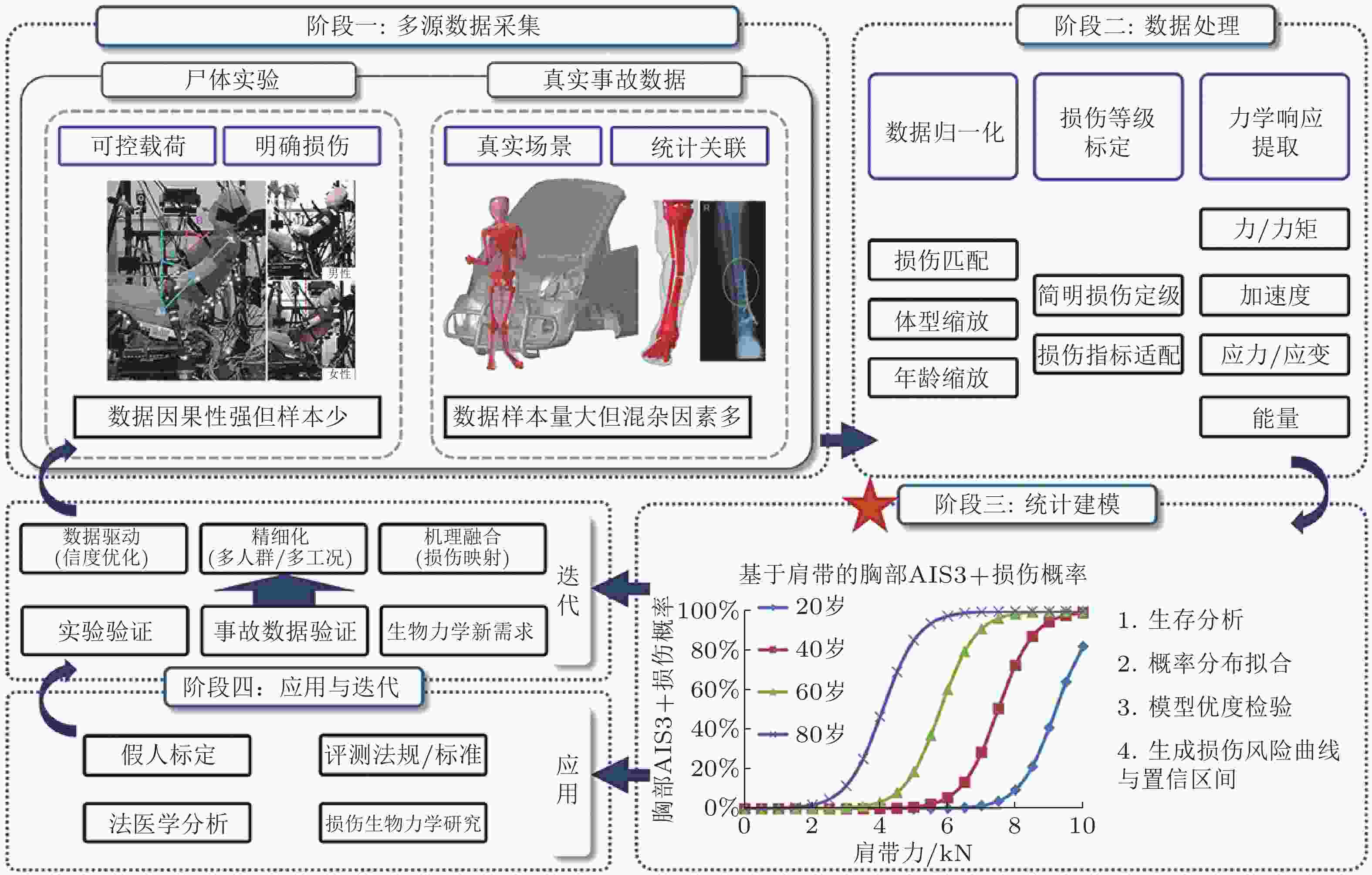
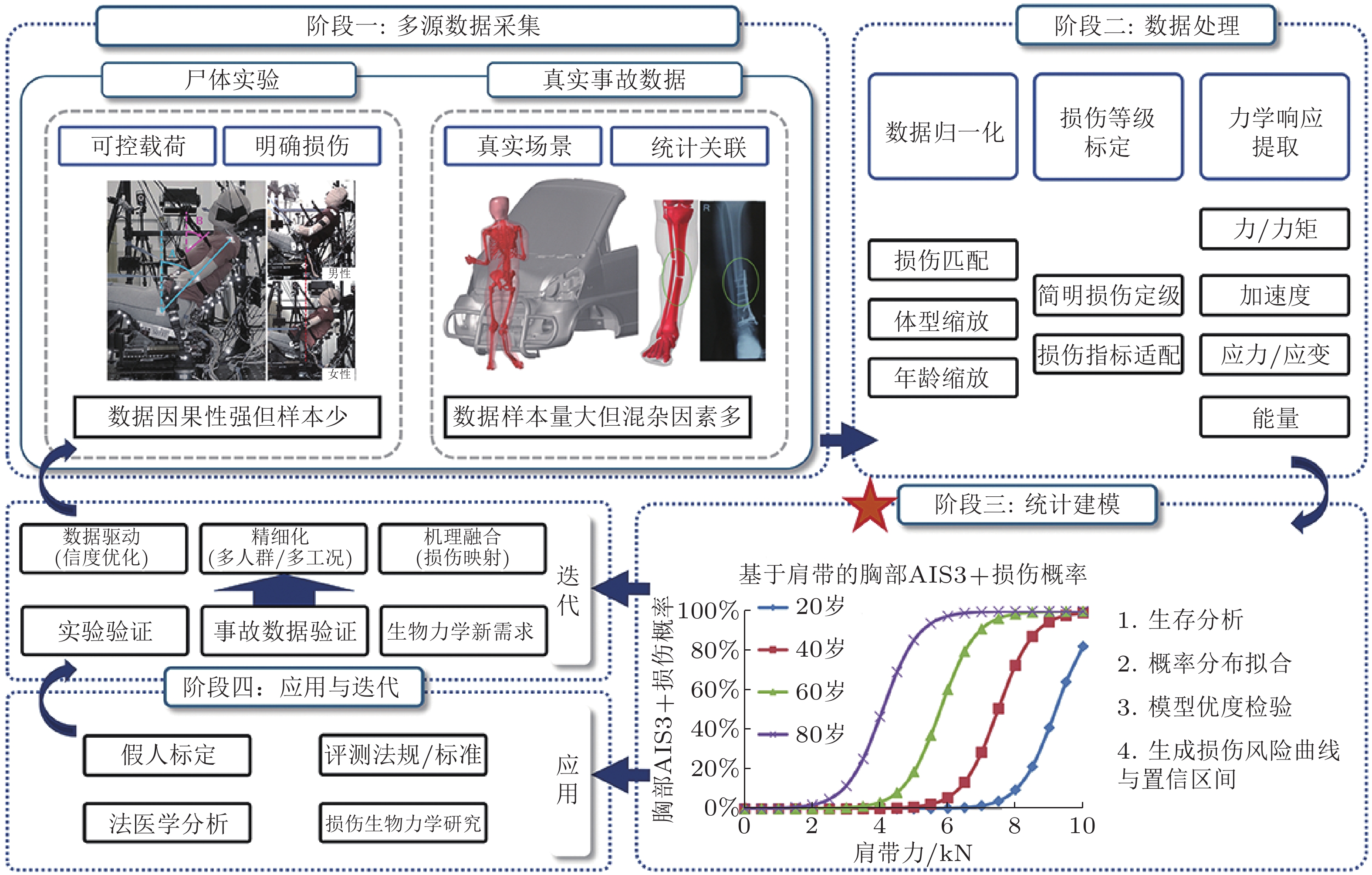
图 2 损伤风险曲线典型构建流程(Kang Y S et al. 2023, Shin et al. 2023, Rommel 2018)
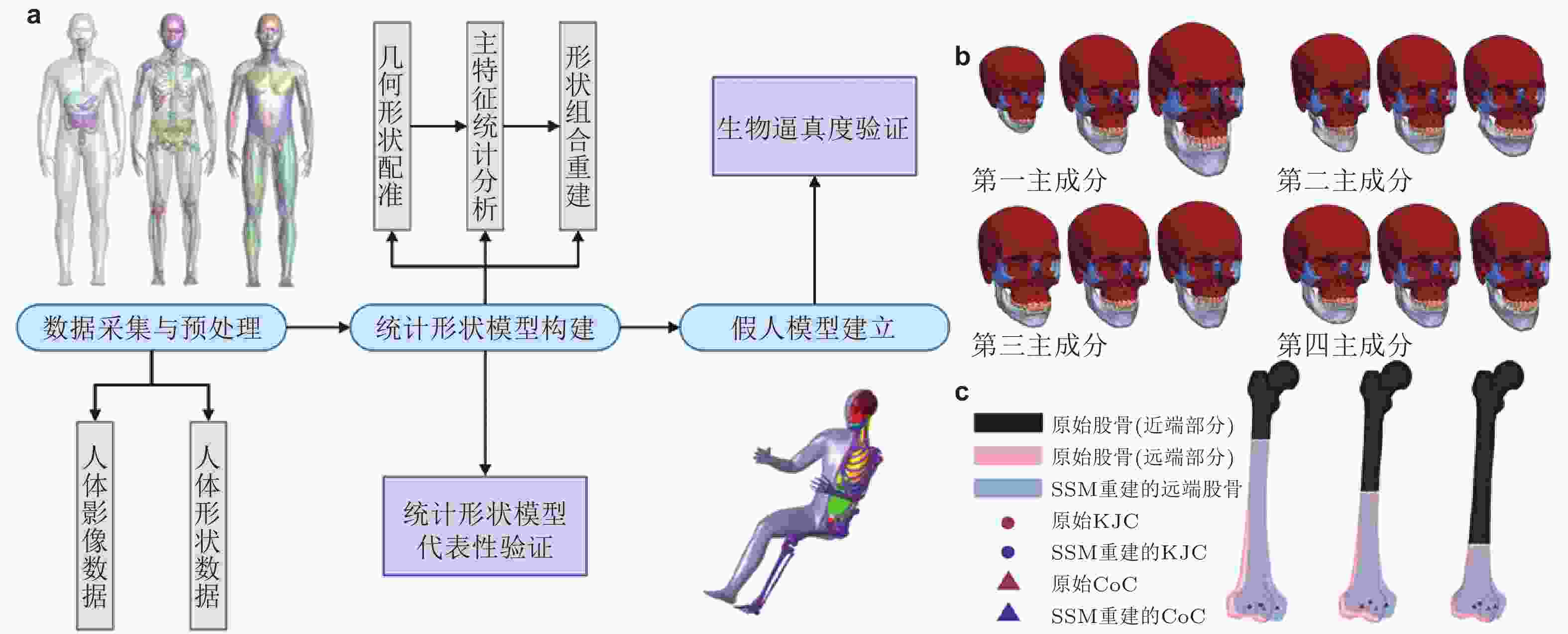
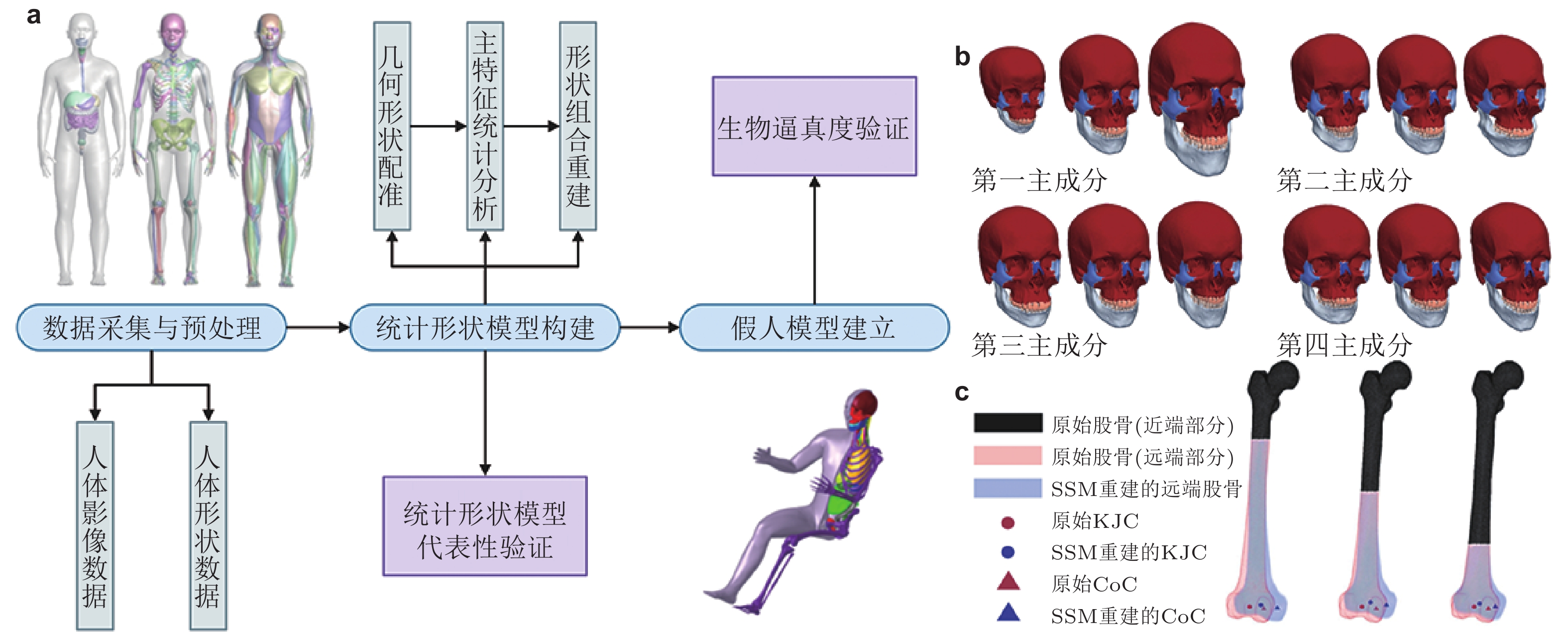
图 4 统计形状模型在生物力学模型中的应用. (a) 仿真假人建模过程中统计形状模型应用流程; (b) 基于统计形状模型的颅骨参数化几何模型(Albrecht 2011); (c) 基于统计形状模型的股骨形状与力学性能预测, KJC为膝关节中心, CoC为股骨踝中心(Eggermont et al. 2024)
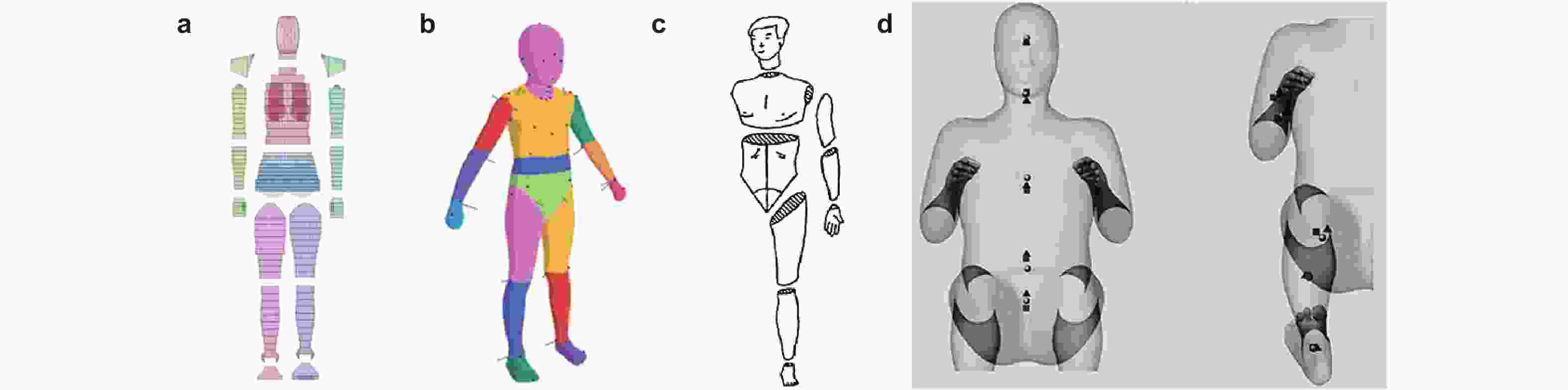
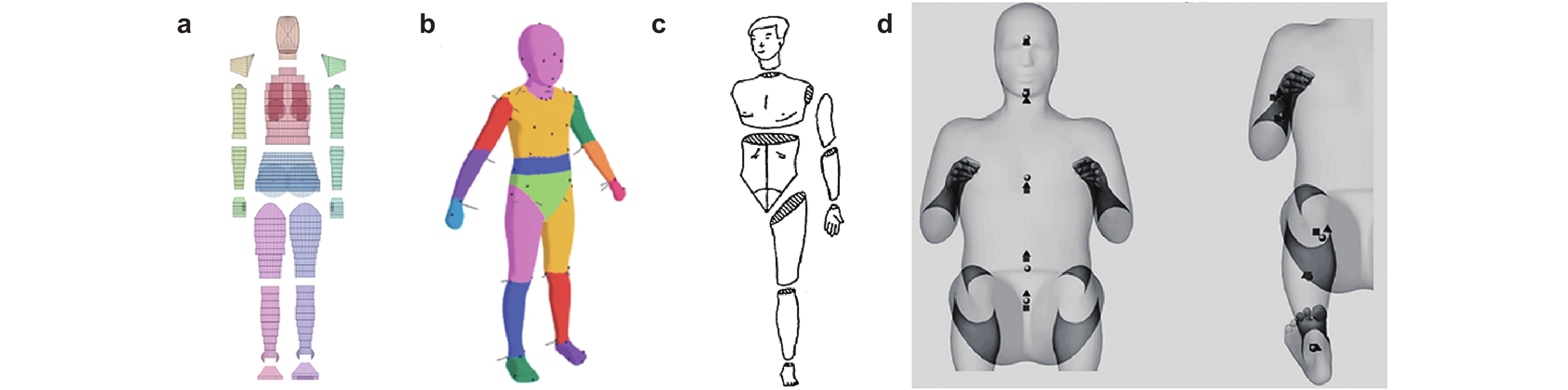
图 5 面向质量分布的人体节段划分方法(a) Hatze (1980)建立的人体节段划分方法(Robertson 2013, Otmani et al. 2023), (b) 儿童身体节段划分方法(Lahkar et al. 2025), (c) 人体节段划分方法( GB/T 17245-2004), (d) GHBMC模型的节段质心位置示意(Vavalle et al. 2014)
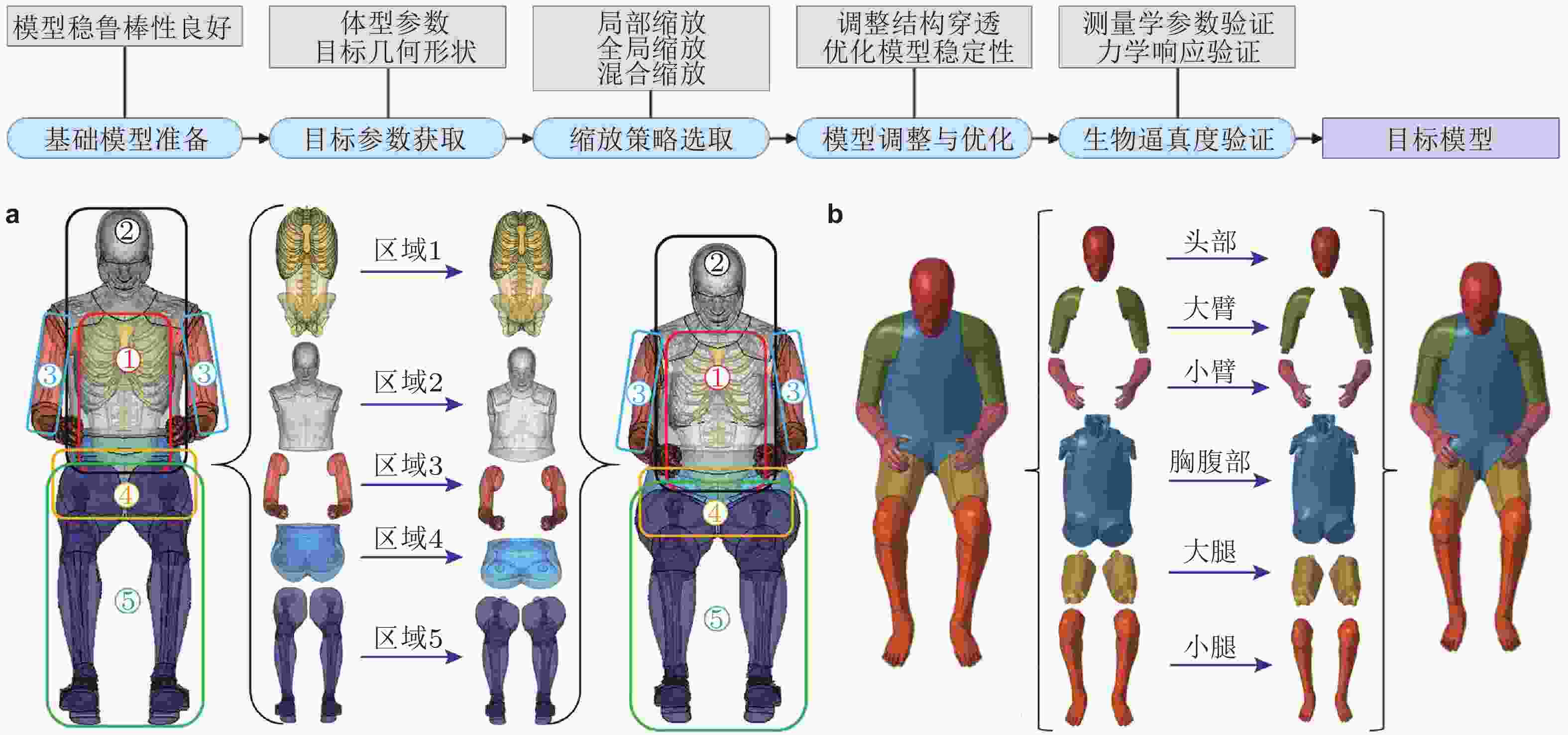
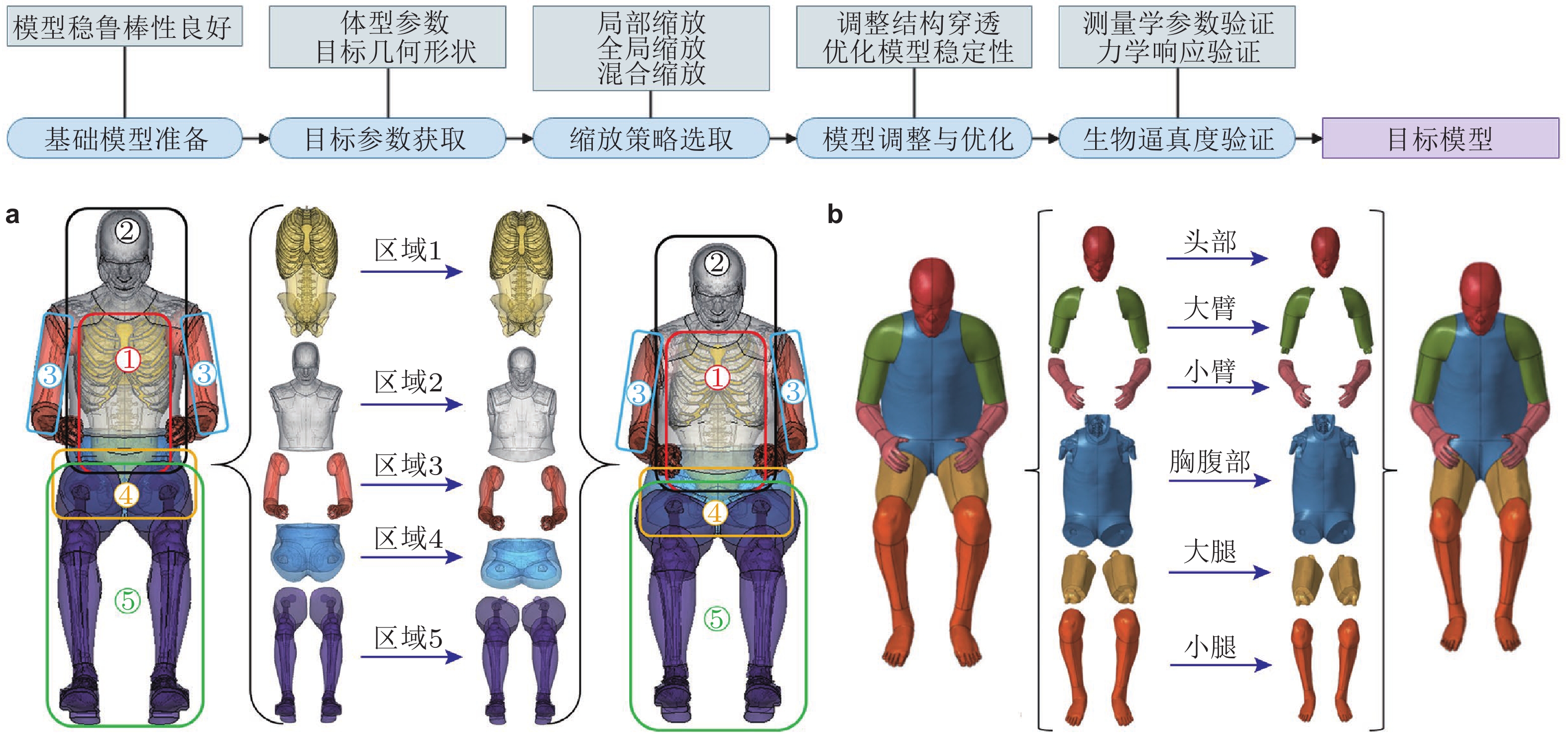
图 6 HBM分节段缩放示意(a) THUMS HBM分节段缩放示意(Yu et al. 2023); (b) GHBMC HBM分节段缩放示意(Zhang et al. 2017)
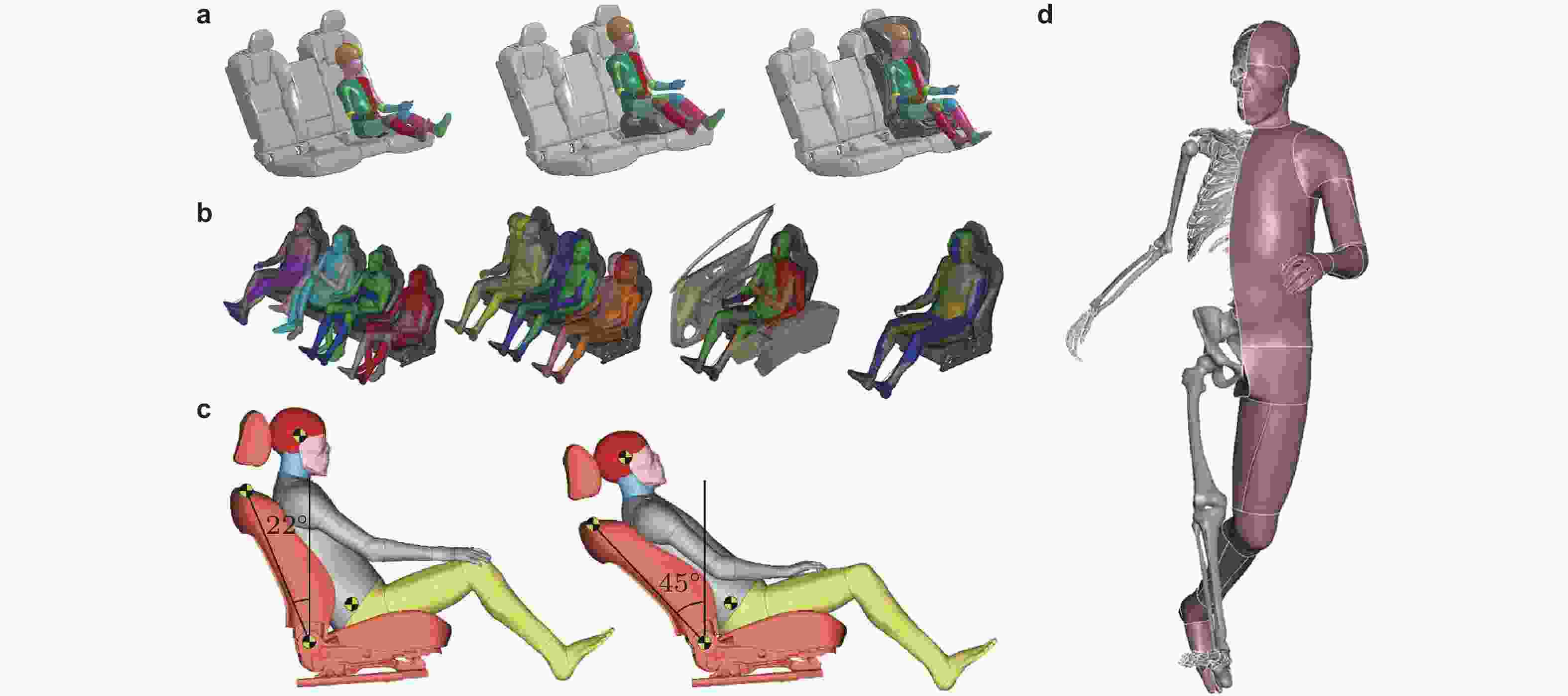
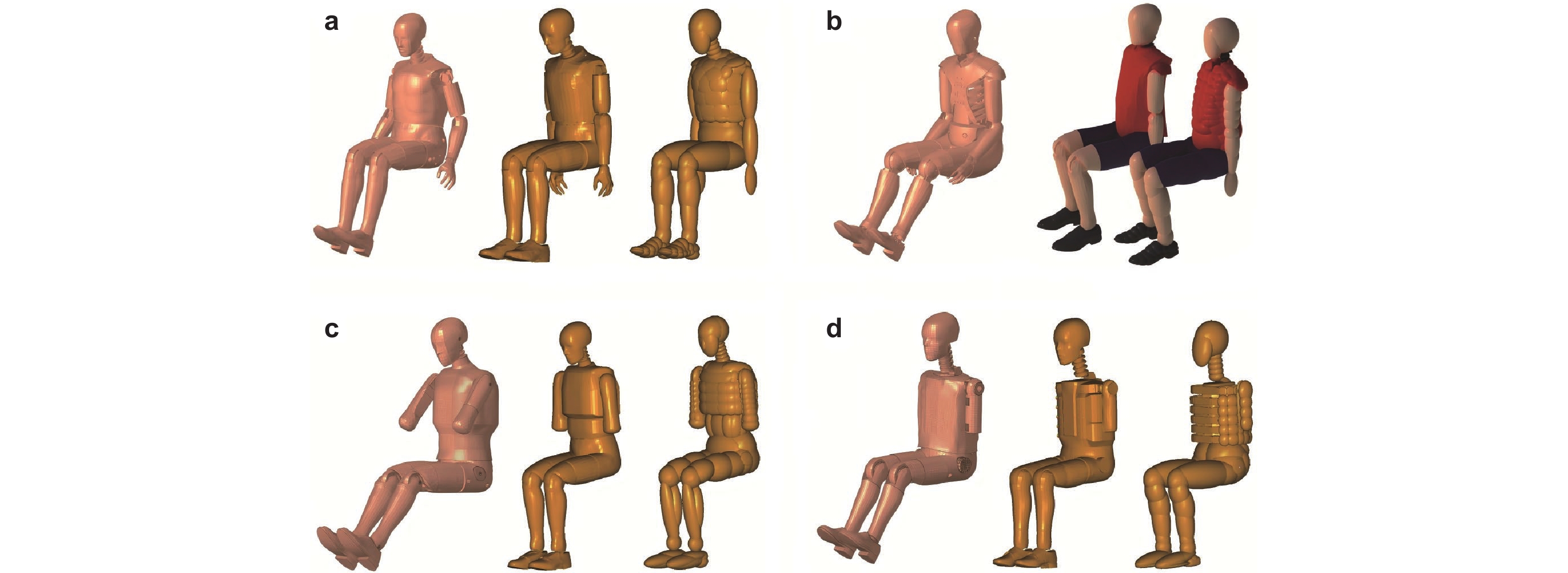
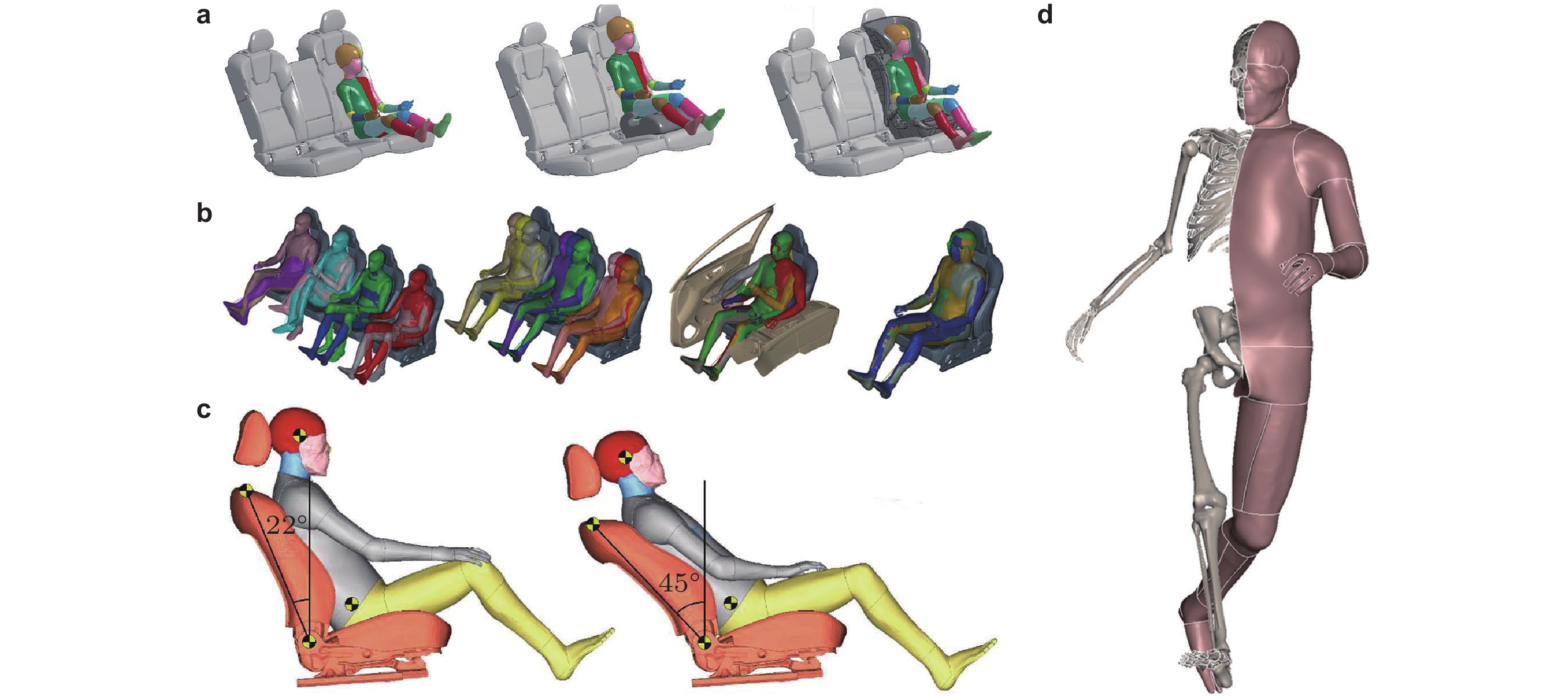
图 7 碰撞前差异人体姿态示意(a) 座椅装置影响的儿童差异姿态(El-Mobader 2018); (b) 乘员非标准姿态(Leledakis et al. 2021); (c) 自动驾驶技术与零重力座椅影响的大倾角姿态(Ngo et al. 2021); (d) 行人非标准姿态(Tang et al. 2023b)
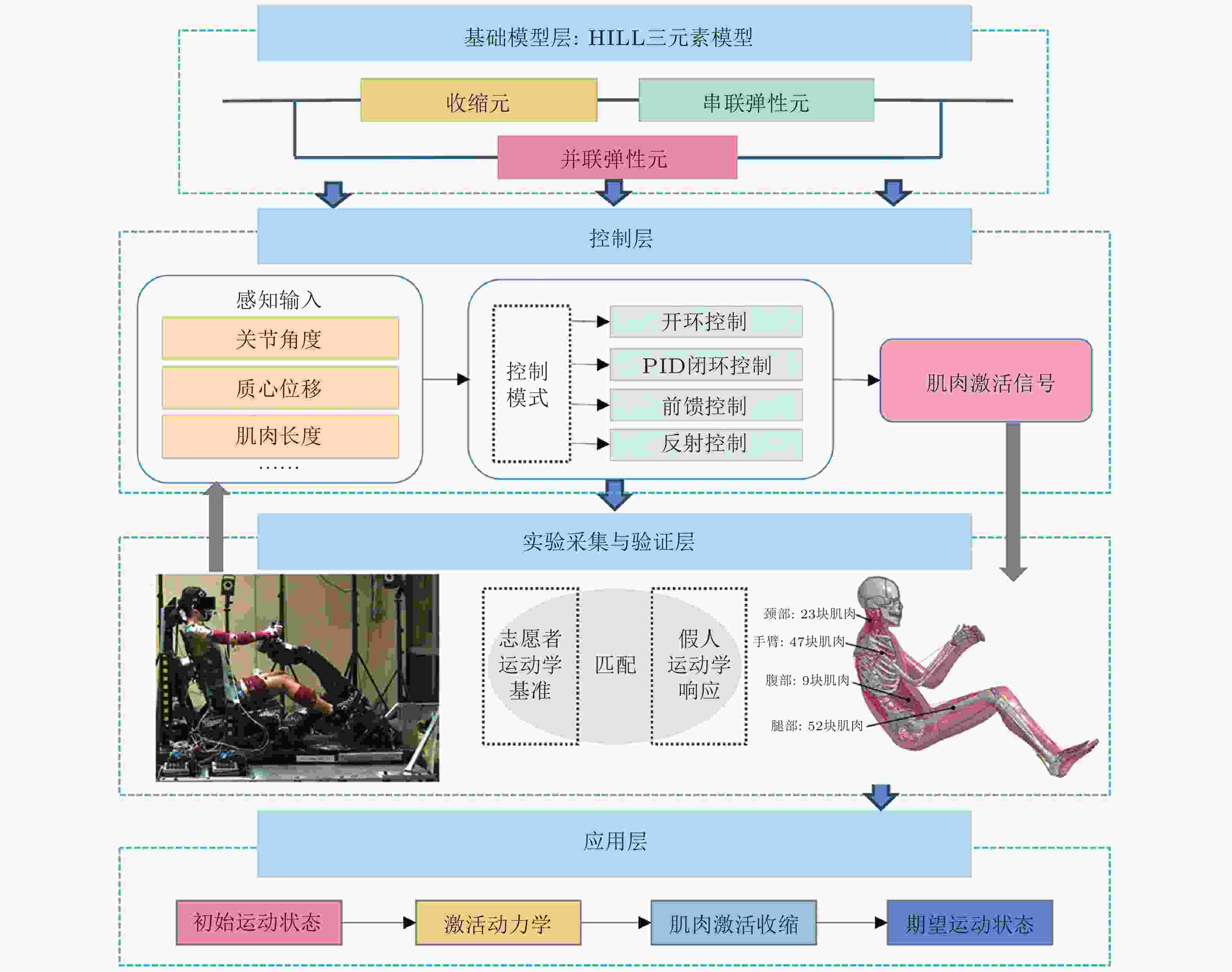
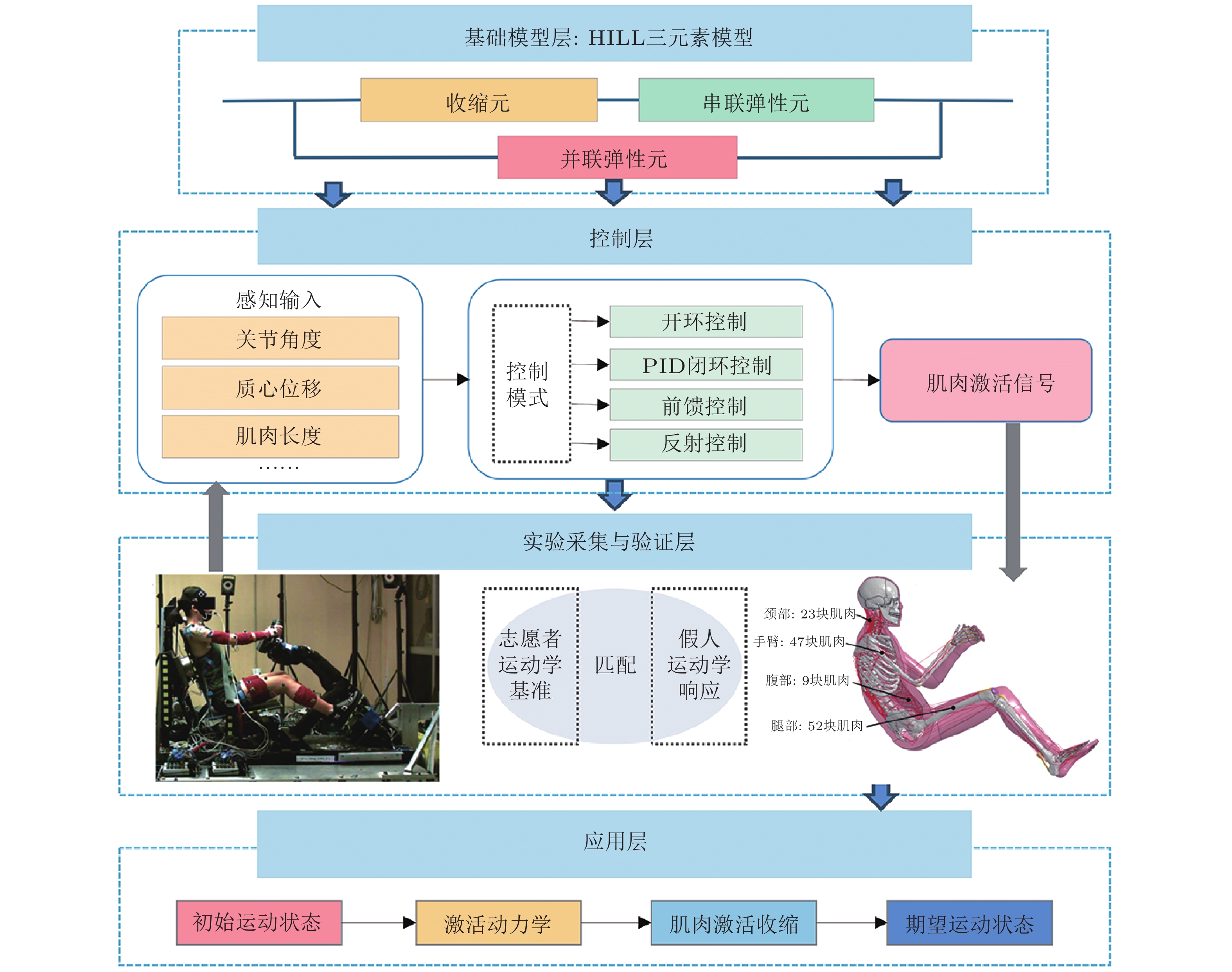
图 8 典型FE-HBM主动肌肉模型示意(Johan et al. 2024, Chan et al. 2021)
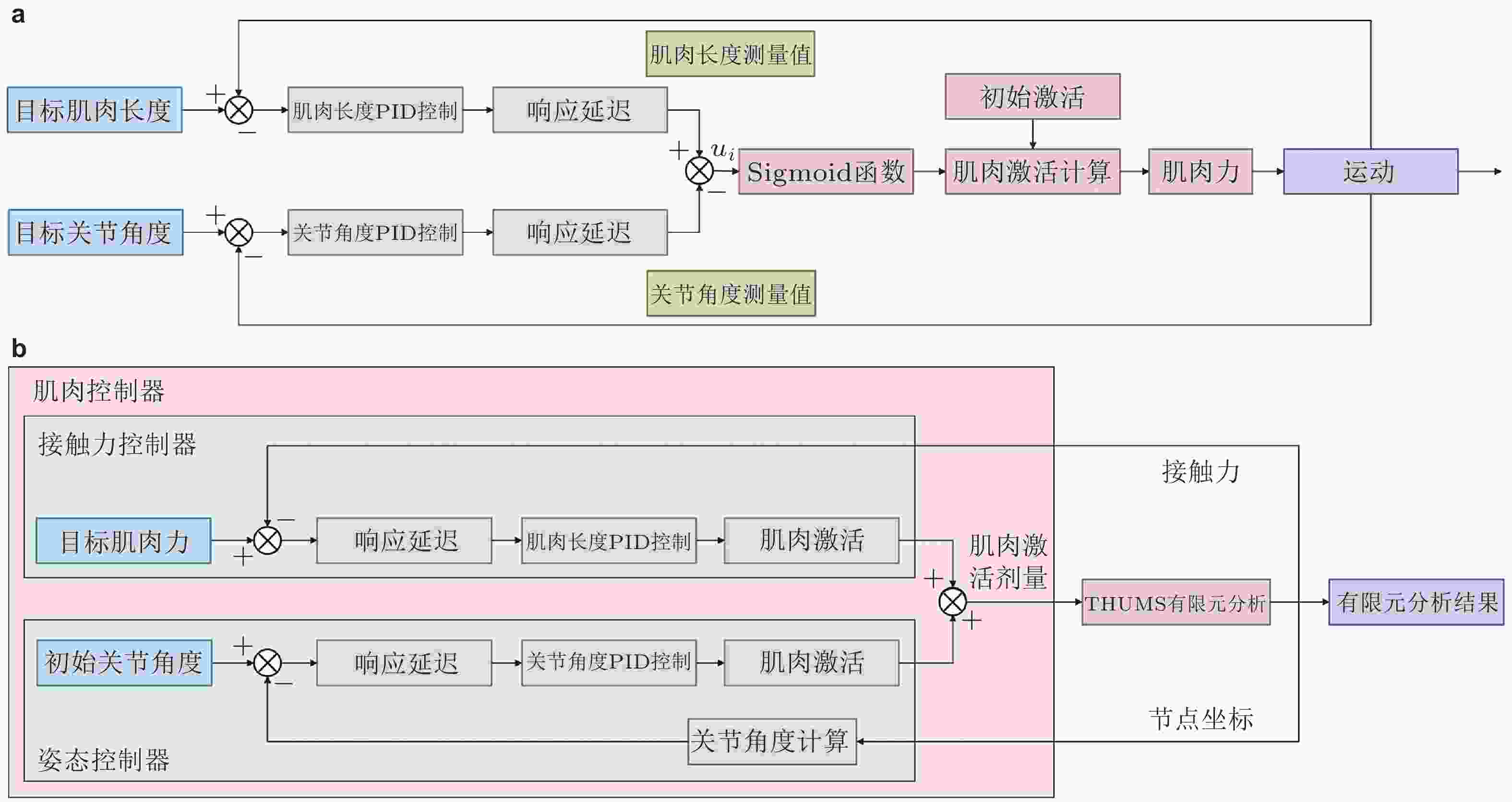
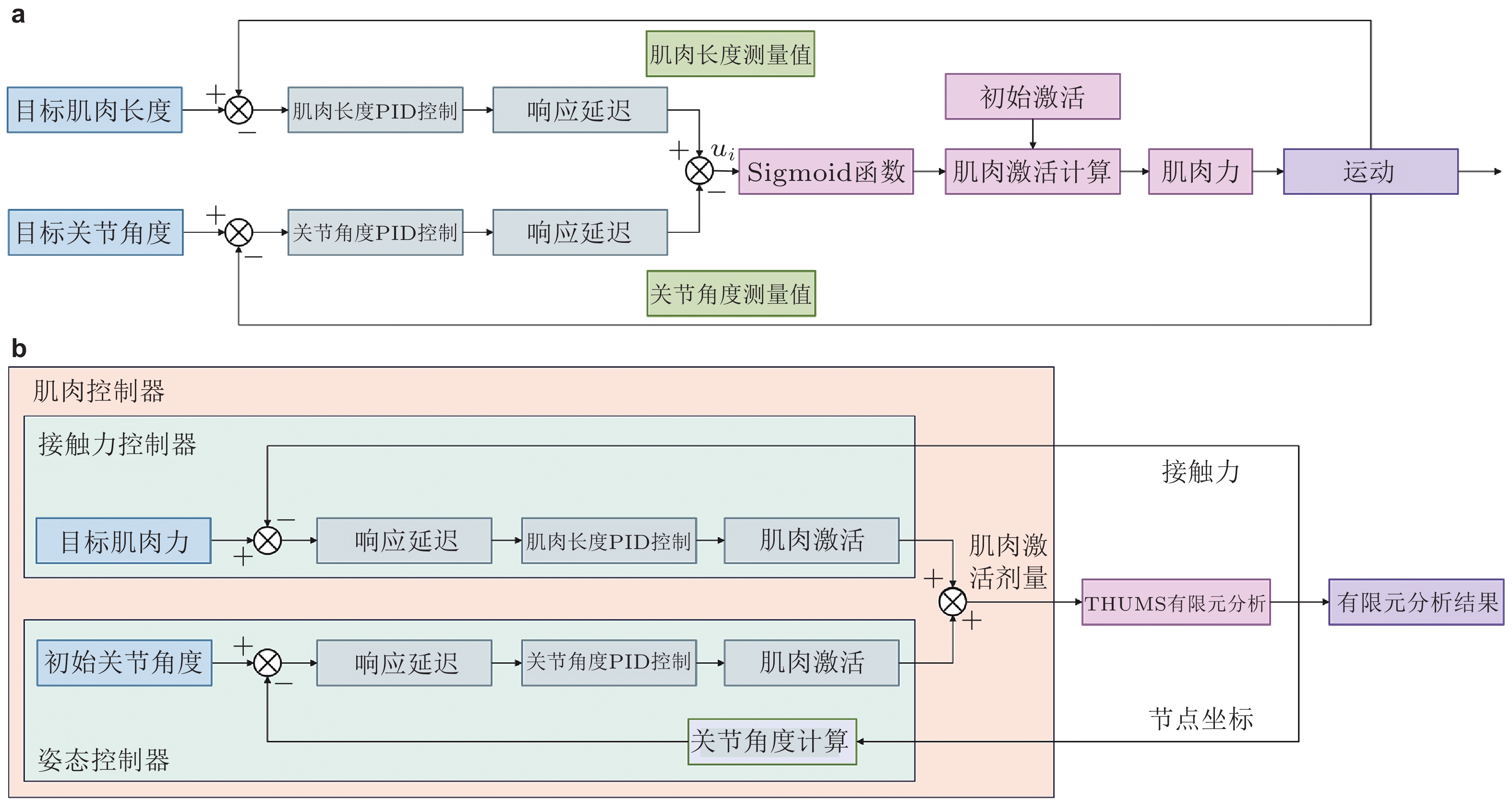
图 9 应用PID反馈控制的典型主动肌肉模型(Larsson et al. 2023b) (a) 基于肌肉长度测量值与关节角度测量值进行PID 反馈控制的主动肌肉模型; (b) 基于接触力测量值与关节角度测量值进行PID 反馈控制的主动肌肉模型
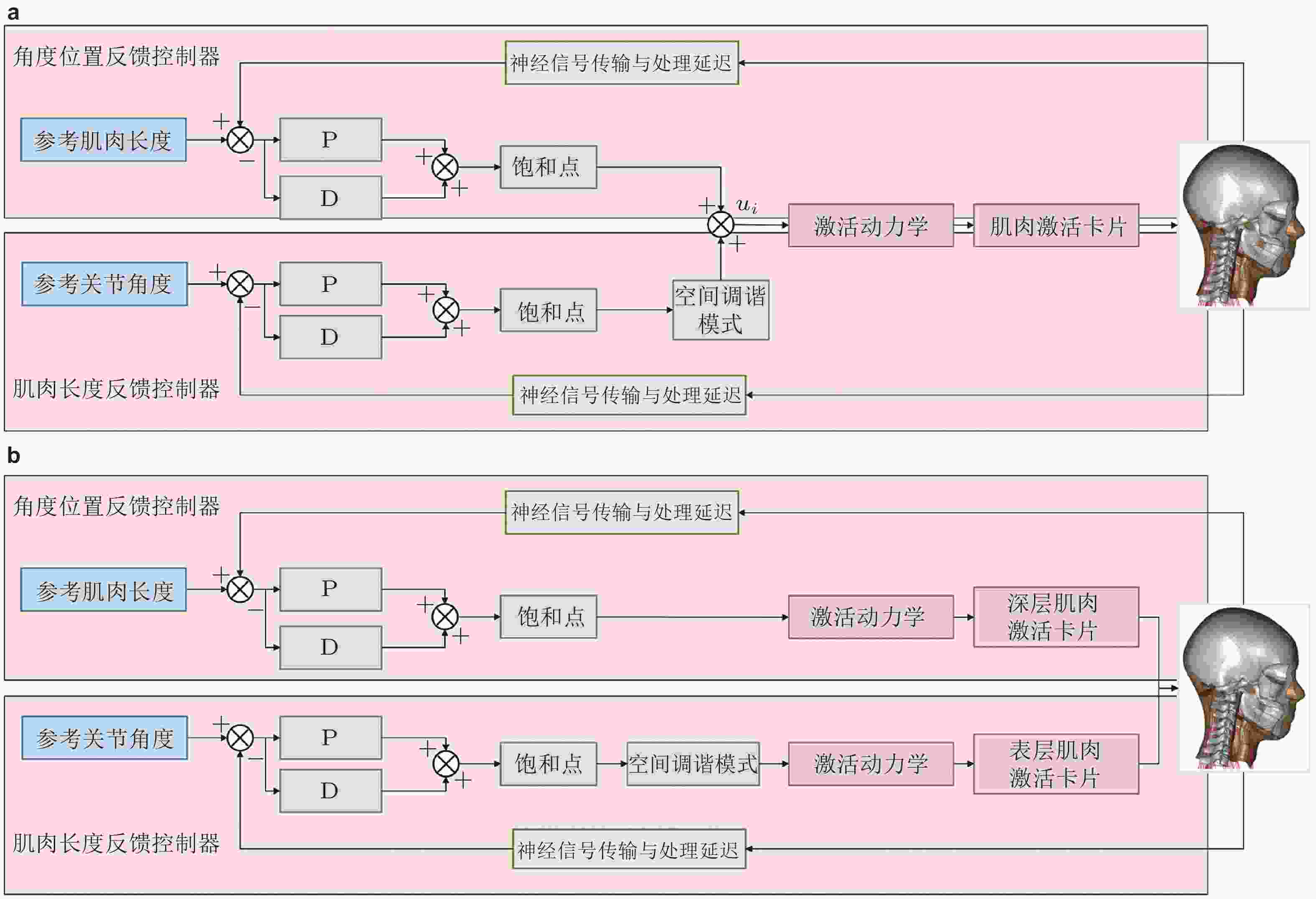
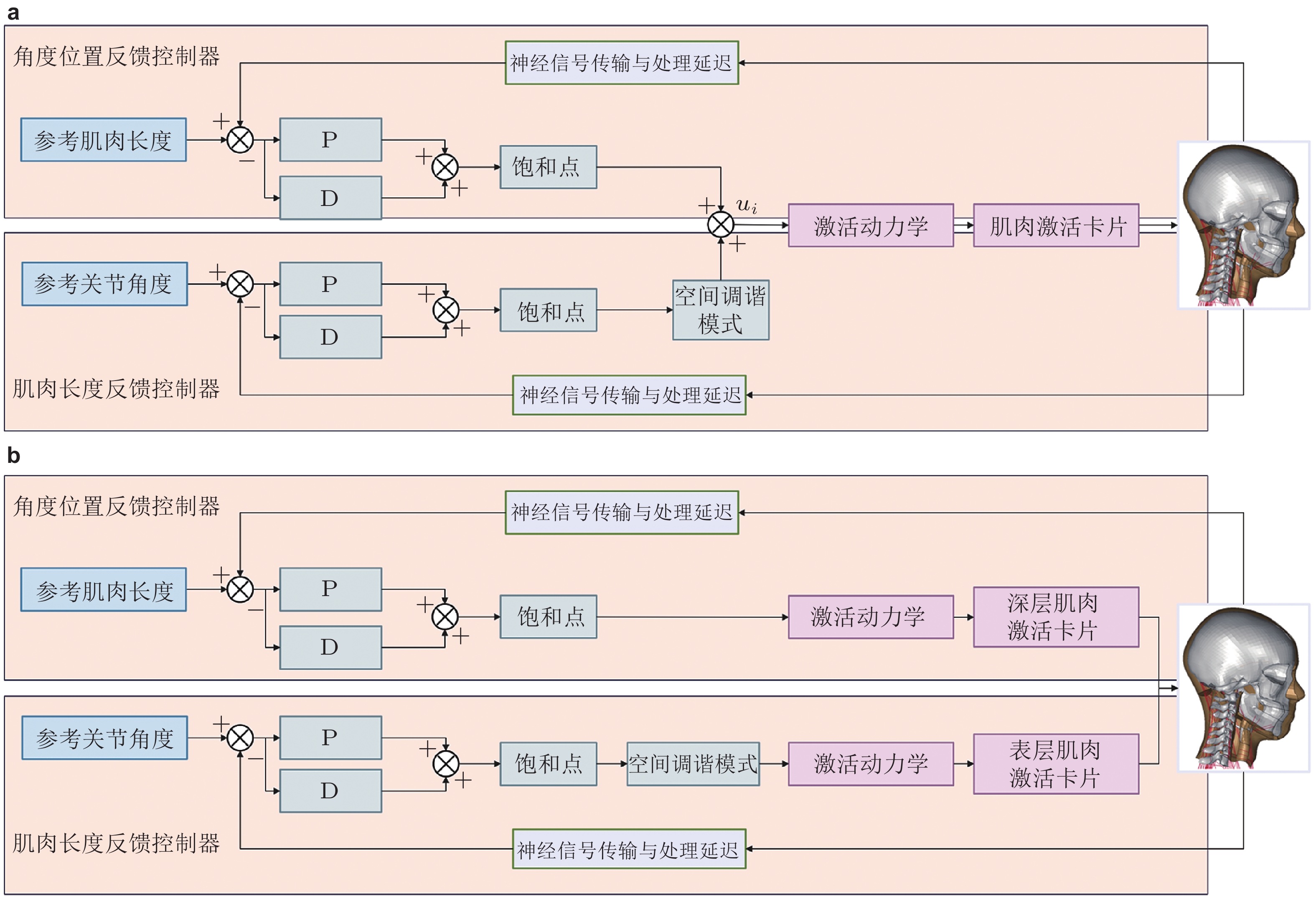
图 10 VIVA + HBM应用的主动肌肉模型(a) 肌肉长度与关节角度耦合控制的主动肌肉模型; (b) 基于肌肉长度控制深层肌肉并基于关节角度控制表层肌肉的主动肌肉模型(Putra & Thomson 2022)
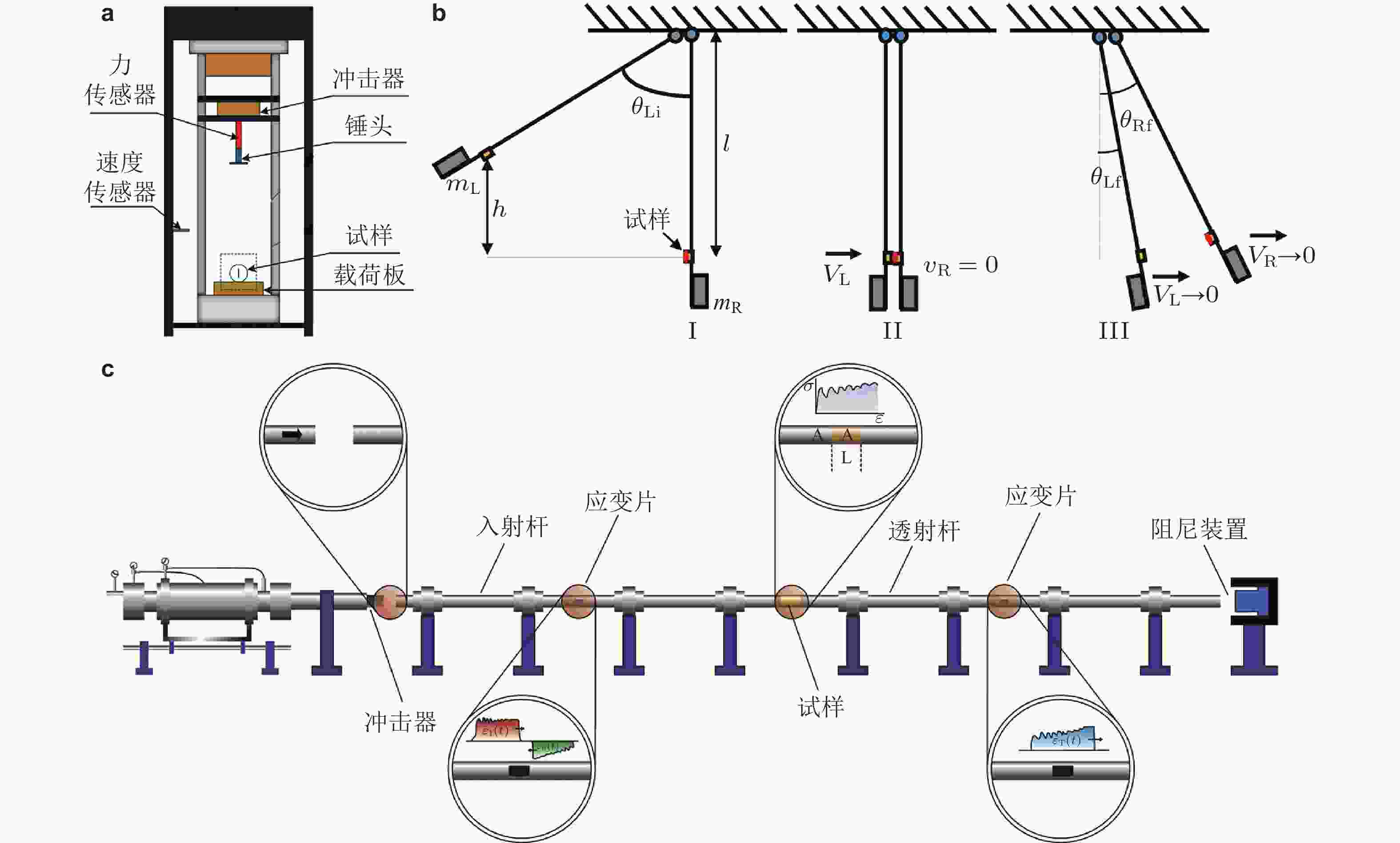
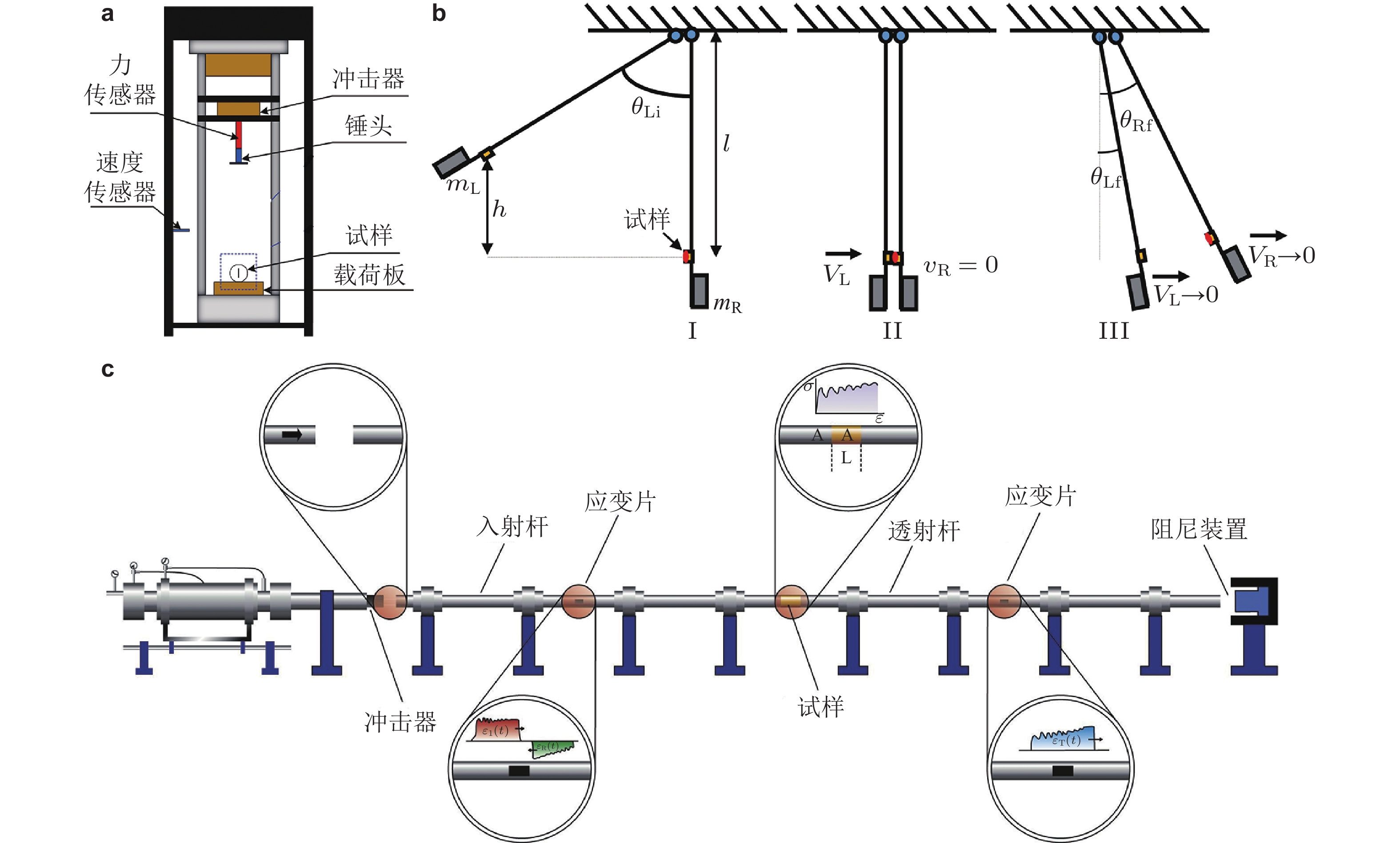
图 11 常用差异应变率的力学测试方法(a) 落槌测试装置(Feng et al. 2022); (b) 摆锤测试装置(Swift et al. 2016); (c) 分离式霍普金森压杆测试(Khosravani & Weinberg 2018)
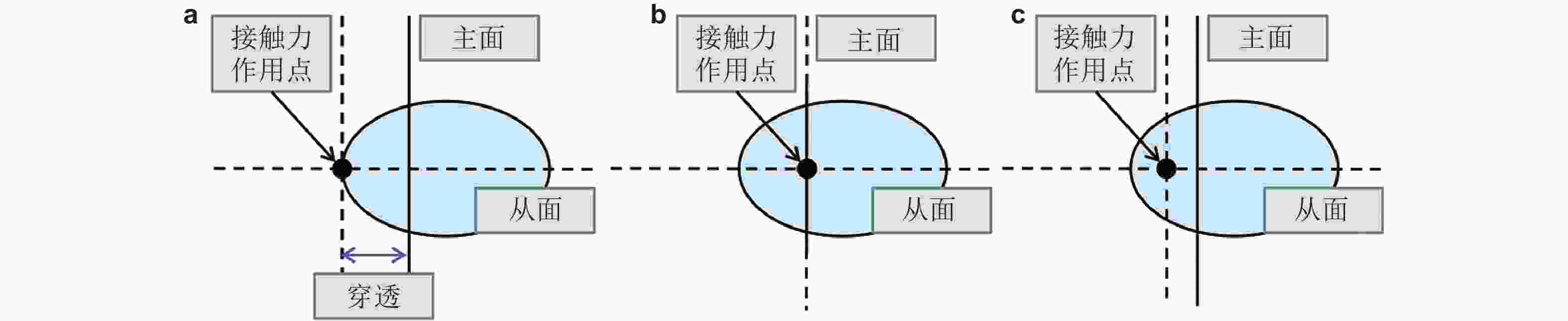
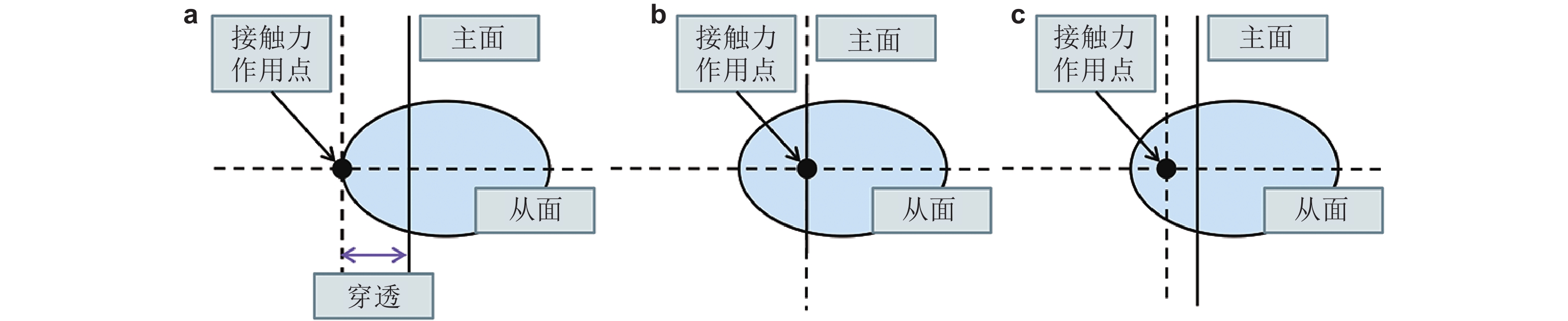
图 12 刚体模型接触特性示意(a)主面变形; (b) 从面变形; (c) 主从面变形(Flores 2022, Skrinjar et al. 2018)
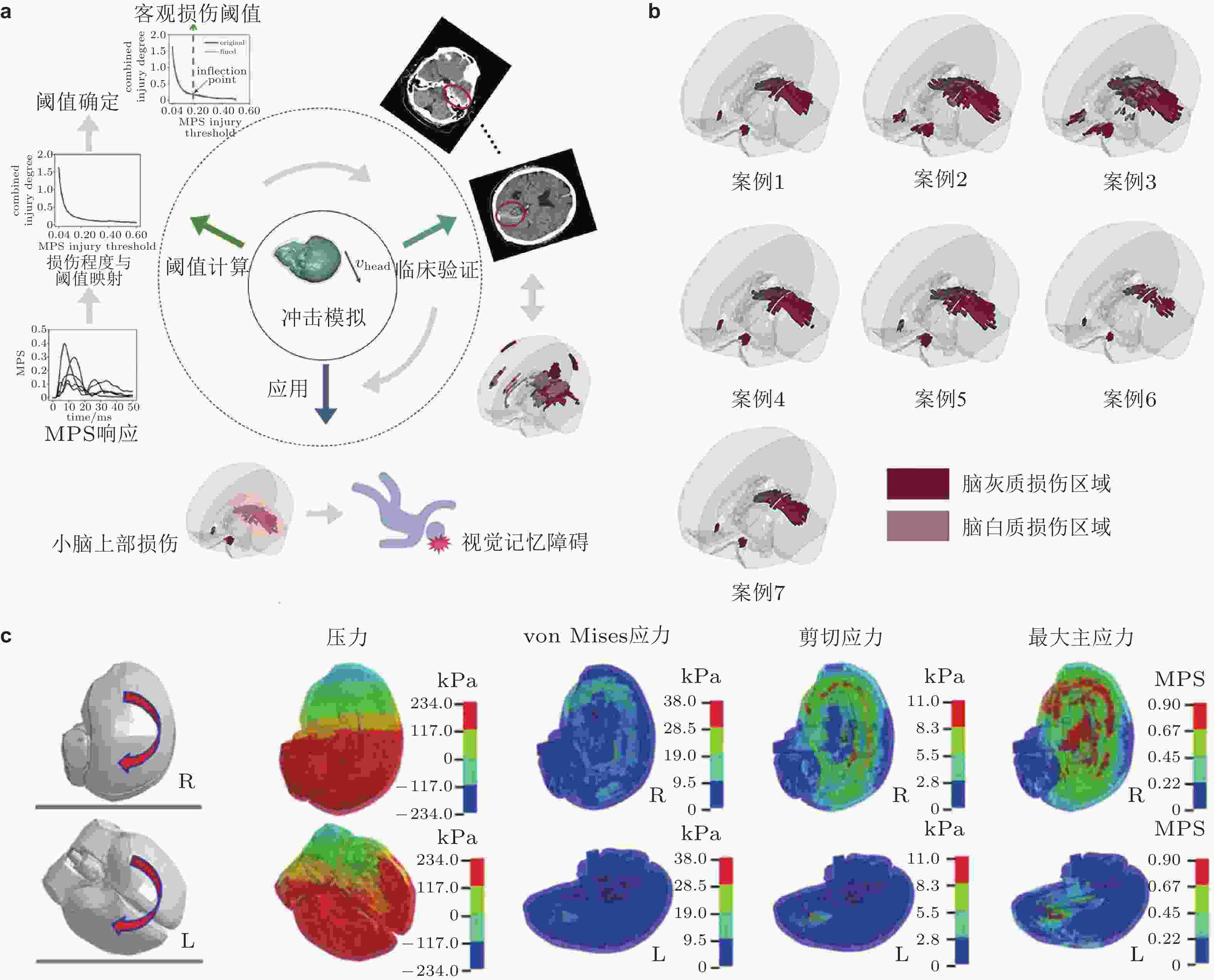
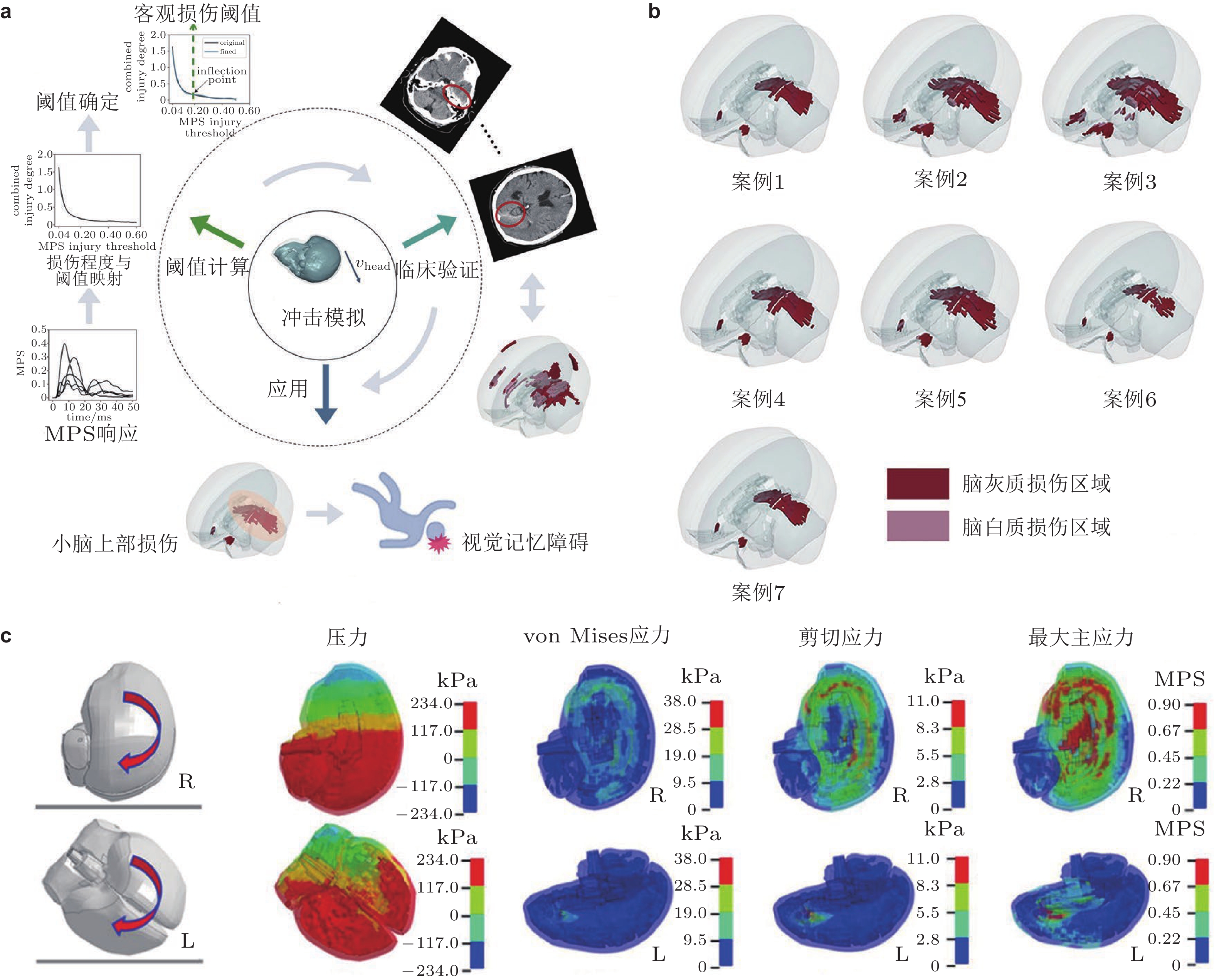
图 13 微观力学响应损伤阈值开发与验证(a)基于数据驱动的脑组织微观力学响应损伤阈值计算; (b) 基于微观力学响应的损伤定位(Zhang et al. 2024); (c) 微观力学响应损伤预测能力差异(Shi et al. 2020)
表 1 主要实体汽车碰撞假人年表
年份 型号 碰撞环境 特点 缺陷 1949 Sierra Sam 95th男性 正面 人体形状;
铰接式关节人体仿生程度低;
响应采集能力低;
可重复性与再现性差1966 VIP 5th女性
50th男性
95th男性正面 考虑性别与体型;
橡胶颈部;
头部、胸椎及腿部传感器人体仿生程度低;
可重复性与再现性差1971 Hybrid I 50th男性 正面 橡胶颈部;
皮肤材料优化颈部生物逼真度低;
响应采集能力低1972 Hybrid II 50th男性 正面 第一种法定假人;
重复性与再现性提升关节刚度不佳;
缺乏必要传感器;1973 GMATD 502 50th男性 正面 坐姿接近人体;
恒定扭矩的肩关节与膝关节;
颈部安装角度可调图纸与文件不足;
颈部与胸部生物逼真度低1976 Hybrid III 50th男性 正面
后向生物逼真度提升;
高质量传感器;
图纸与文件完善载荷位置与温度敏感性;
胸腹响应采集能力不足;
后碰撞生物逼真度不足1978 Hybrid IIP 50th男性 行人 表征小腿和膝盖损伤风险 质量分布与人体存在差异 1979 SID 50th男性 侧面
行人胸部设置液压减震器;
增加胸部质量替代肩部与手臂质量缺乏肩部载荷传递路径;
胸椎刚度不佳;
生物逼真度不足1982 GM 3-year-old airbag 3岁儿童 正面 泡沫填充胸腔;
颈部分段结构外部生物逼真度不足 1985 Hybrid II 3岁和6岁儿童 正面 基于ARL儿童假人改进 人体测量学可靠性不足;
生物逼真度不足1987 Hybrid III 5th女性
95th男性正面
后向基于Hybrid III 50th假人
缩放胸腹响应采集能力不足;
无法用于侧面碰撞;
人体测量学可靠性不足1987 Hybrid III 6岁儿童 正面 基于Hybrid III假人缩放 响应采集能力不足;
颈部与脊椎僵硬1989 EUROSID-1 50th男性 侧面 针对侧面碰撞设计的颈、胸、腹与骨盆结构 肋骨生物逼真度不足;
响应采集能力不足;
仅能用于汽车前排乘员1989 BIOSID 50th男性 侧面 较为完善的肋骨−内脏结构;
胸部、肋骨和骨盆偏转测量能力;
出色的耐用性、可重复性和再现性生物逼真度存在局限性;
响应采集能力不足1990 CRABI 6, 12, 和
18个月婴儿全向 颈部生物逼真度高;
考虑婴儿与安全气囊交互生物逼真度可靠性不足;
头部响应结果差1992 Hybrid III 3岁儿童 正面 基于Hybrid III6岁儿童假人缩放 响应采集能力不足;
颈部、胸椎与腰椎僵硬;
忽略下肢撞击损伤1994 SID IIs 小体型成年男性
12至14岁青少年
5th女性侧面 头颈针对侧面碰撞优化设计;
高频率传感器单侧手臂;
颈部角度不可调整1997 Q3 3岁儿童 正面
侧面考虑侧面碰撞;
颈部灵活且活动范围大;
浮动的肩部关节外部生物逼真度不足;
颈部角度不可调整;
节段质量缺乏根据1997 THOR 50th男性 正面
后向节段仿生结构;
被动肌肉作用模拟;
数据采集系统先进无法用于侧面碰撞;
关节柔性缓冲不足1997 RID 1 50th男性 后向 分离椎体的颈椎和胸椎;
头盖骨载荷传感器;
为低冲击速度追尾碰撞
测试设计脊柱刚度过大;
响应采集能力不足1997 POLAR 50th男性 行人 适应侧面冲击的脊柱刚度;
更加柔顺的膝关节;
柔性材料的胫骨冲击下运动学与人体
存在差异;
膝关节刚度不足;
脊柱刚度过大1998 BIORID 50th男性 后向 与人体相同数量的椎骨;
橡胶椎间盘模拟脊柱刚度;
基于钢丝模拟颈部生物阻尼头颈枕髁关节位置保持不佳;
颈部轴力和弯矩测量不准确;
颈部弹簧阻尼系统参数设定缺乏依据1999 Q6 6岁儿童 正面
侧面基于Q3建立 侧向生物逼真度不佳 1999 BioRID II 50th男性 后向 改进的颈部弹簧阻尼;
更接近人体的脊柱曲线;
改进的肩胛骨与盆骨颈部载荷采集不准确;
可重复性和再现性较差;
具有速度敏感性1999 POLAR II 50th男性 行人 创新的膝关节设计;
膝关节韧带刚度可调;
柔性的股骨与胫骨膝关节刚度不足;
骨盆损伤模拟不佳;
脊柱僵硬2000 Hybrid III PED 5th女性
50th男性
95th男性行人 优化盆骨以增加髋关节
活动范围;
适应行人姿态的腰椎膝盖简化, 只允许旋转;
缺乏侧面冲击下生物逼真度;
低强度下头部生物逼真度低2000 Hybrid III 10岁儿童 正面
后向正常或放松坐姿;
考虑与安全气囊接触的
外部逼真度响应采集能力不足;
颈部与脊椎僵硬2000 Q0 6周新生儿 正面
侧面基于Q3;
快速组装与拆卸缺乏足够的生物逼真度依据;
髋关节缺乏生物逼真度2000 ES-2 50th男性 侧面 颈部能够侧向屈曲;
颈部互换性高;
肋骨、锁骨和肩胛骨灵活;
耐久性良好胸部采集能力不足;
腹部和骨盆生物逼真度不足;
背部外部生物逼真度低;
腹部可重复性与再现性差;2000 WorldSID 50th男性 侧面 肋骨偏转方向灵活;
基于汽车乘员坐姿设计;
良好的重复性和再现性下肢生物逼真度不佳;
肩关节灵活度不足;
肩部区域刚度不足2000 RID 2 50th男性 后向 骨盆角度可调;
颈部能够扭曲和侧向弯曲;
寰椎关节设置15°自由
运动范围寰椎关节缺乏阻尼过于灵活;
颈部以下脊椎僵硬;
无法量化假人背部与座椅靠背相互作用2003 RID3D 50th男性 后向 斜向冲击测评能力;
重复性好;
后背的外部生物逼真度较高冲击速度敏感性;
下颈部灵活度不足;
胸椎与腰椎僵硬2004 ES-2re 50th男性 侧面 基于ES-2优化;
肩部载荷测量仪器;
胸部外部生物逼真度增强载荷作用位置与方向敏感;
缺乏肩部偏转测量能力;
可重复性差2004 Q1 12月婴儿 正面
侧面能够测量头部、胸部和骨盆加速度;
易于组装、拆卸及标定;
真实的解剖结构生物逼真度依据不足;
脊柱刚度过大;
侧向生物逼真度不佳2004 Q1.5 18月婴儿 正面
侧面能够测量头部、胸部和骨盆加速度;
易于组装、拆卸及标定;
真实的解剖结构生物逼真度依据不足;
脊柱刚度过大;
侧向生物逼真度不佳2005 WorldSID 5th女性 侧面 基于WorldSID50th男性假人缩放;
胸部斜向负荷模拟能力;
良好的生物逼真度颈部结构复杂 2006 Q3s 3岁儿童 侧面 解决Q3假人头部共振;
颈、肩、胸和髋关节改进;
侧向冲击下顺应性较好胸部轮廓与人体存在差异;
颈椎和胸椎刚度过大2011 POLAR III 50th男性 行人 改良骨盆和下肢;
应用大量塑料和橡胶部件以模拟人体阻尼;
可重复性与再现性良好质量分布与人体存在差异;
采集系统耐久度不佳2013 Q10 10.5岁儿童 正面
侧面球窝关节模拟肱骨−肩胛
骨关节;
针对“潜水”的腹部压力
传感器;
类似WorldSID的骨盆结构胸部、脊柱僵硬;
侧向生物逼真度不佳;
可重复性与再现性差2014 LODC 9-11岁儿童 全向 头部具有儿童惯性特性;
灵活的胸椎、肩部及颈部;
具有腹部压力和变形测量能力生物逼真度验证不足 2019 THOR-AV 5th女性
50th男性正面
后向斜倚坐姿;
更简单、生物逼真度更高颈部姿态无法精确控制  下载: 导出CSV
表 2 中国新车评价规程 (2024年版) 主要试验工况及汽车碰撞假人应用总览
测试环境 假人型号 代表群体 乘员位置 核心测评目的 正面100%重叠刚性壁障碰撞 Hybrid III 50th 成年男性 驾驶员 评估正面碰撞中驾驶员损伤风险, 作为传统法规型正面约束系统性能的基准测试 正面100%重叠刚性壁障碰撞 Hybrid III 5th 小体型成年女性 第二排乘员 评估正面碰撞中小体型成年乘员损伤风险, 补充对乘员体型差异的覆盖 正面100%重叠刚性壁障碰撞 Q3 3岁儿童 第二排 (使用儿童约束系统) 评估正面碰撞中儿童约束系统对低龄儿童的防护效果及车辆后排安全性 正面50%重叠 MPDB碰撞 THOR 50th 成年男性 驾驶员 评估偏置碰撞中驾驶员损伤风险及车辆前部结构碰撞兼容性 正面50%重叠MPDB碰撞 Hybrid III 5th 小身材成年女性 前排乘员/第二排 补充评估偏置碰撞中小体型乘员保护水平 正面50%重叠MPDB碰撞 Q10 10 岁儿童 第二排 (使用儿童约束系统或增高坐垫) 评估偏置碰撞中学龄儿童损伤风险及车辆后排安全性 侧面可变形移动壁障碰撞 WorldSID 50th 标准成年男性 前排撞击侧 评估侧向移动壁障撞击条件前排乘员的胸部、腹部和骨盆损伤风险 侧面可变形移动壁障碰撞 SID-IIs 小身材成年女性 第二排撞击侧 评估侧面碰撞中后排小体型乘员的防护水平 侧面柱碰撞 WorldSID
50th/ES-2re标准成年男性 前排 评估车辆在侧向侵入、局部集中载荷条件下对前排乘员的极限防护能力 侧面柱碰撞 Q3 3 岁儿童 第二排撞击侧 (使用儿童约束系统) 评估固定刚性柱体侧向撞击中儿童乘员的生存空间与约束系统有效性 低速后碰撞颈部保护(鞭打试验) BioRID II 标准成年乘员 驾驶员第二排 评估低速追尾工况中座椅及头枕系统对颈部挥鞭伤的防护能力 侧面远端乘员保护
试验WorldSID 50th 成年男性 滑台试验 (远端侧) 评估侧面碰撞中非撞击侧乘员的横向位移与二次碰撞风险 侧面远端乘员保护
试验SID-IIs 女性 滑台试验 (远端侧) 评估侧面碰撞中非撞击侧小体型乘员的横向位移与二次碰撞风险
下载: 导出CSV
表 3 主要汽车碰撞假人响应采集系统(Aekbote et al. 2018b, Crandall et al. 2011, Humanetics 2019, Yoganandan & Nahum 2015)
假人型号 Hybrid
III 50thHybrid
III 5thTHOR
50thQ3 Q10 WorldSID
50thSID
IIsES
2reBioRID
II通道数量 40 ~ 70 40 ~ 70 150 ~ 200 约31 约72 200 ~ 250 约140 约78 约50 头部 面部力 否 否 是 否 否 否 否 否 否 头盖骨力 否 否 否 否 否 否 否 否 是 头部加速度 是 是 是 是 是 是 是 是 是 头部角速度 否 否 $ {\omega }_{x} $, $ {\omega }_{z} $ 是 是 否 否 否 是 头部转角 否 否 $ {\theta }_{y} $ 否 是 否 否 否 $ {\theta }_{y} $ 颈部 上颈部力/力矩 是 是 是 是 是 是 是 是 是 下颈部力/力矩 是 是 是 是 是 是 是 是 $ {F}_{x} $, $ {F}_{z} $, $ {M}_{y} $ 肩部与手臂 肩部力 $ {F}_{x} $, $ {F}_{y} $ $ {F}_{x} $, $ {F}_{y} $ $ {F}_{x} $, $ {F}_{z} $,
$ {M}_{x} $, $ {M}_{y} $否 是 是 是 是 否 肩部加速度 否 否 否 否 $ {a}_{y} $ 否 否 否 否 手臂加速度 否 否 否 否 否 是 是 否 否 肩部转角 否 否 否 否 否 $ {\theta }_{y} $ $ {\theta }_{y} $ 否 否 大臂力/力矩 否 否 是 否 否 是 是 否 否 小臂力/力矩 否 否 是 否 否 是 是 否 否 胸部 T1加速度 否 否 是 否 $ {a}_{y} $ 否 否 是 $ {a}_{x} $, $ {a}_{z} $ T1角速度 否 否 否 否 否 否 否 否 是 T1力/力矩 否 否 否 否 否 否 否 否 $ {F}_{x} $, $ {F}_{z} $, $ {M}_{y} $ 胸部转角 $ {\theta }_{x} $ $ {\theta }_{x} $ 是 否 $ {\theta }_{z} $ $ {\theta }_{y} $ $ {\theta }_{y} $ $ {\theta }_{y} $ 否 胸部变形 否 否 否 $ {S}_{x} $或$ {S}_{y} $ $ {S}_{x} $或$ {S}_{y} $ 否 否 否 否 肋骨加速度 $ {a}_{x} $ $ {a}_{x} $ $ {a}_{x} $ $ {a}_{x} $, $ {a}_{y} $ $ {a}_{x} $, $ {a}_{y} $ $ {a}_{y} $ $ {a}_{y} $ $ {a}_{x} $, $ {a}_{y} $ 否 胸椎加速度 是 是 是 是 是 是 是 是 $ {a}_{x} $, $ {a}_{z} $ 胸椎力/力矩 否 否 是 是 否 否 否 否 否 胸椎角速度 否 否 是 否 是 否 否 否 是 T12加速度 否 否 是 否 是 否 否 是 否 T12角速度 否 否 是 否 是 否 否 否 否 T12力/力矩 否 否 $ {F}_{x} $, $ {F}_{y} $, $ {F}_{z} $,
$ {M}_{x} $, $ {M}_{y} $否 否 否 否 $ {F}_{x} $, $ {F}_{y} $,
$ {M}_{x} $, $ {M}_{y} $否 腹部 上腹部加速度 否 否 $ {a}_{x} $ 否 否 否 否 否 否 腹部压力 否 否 否 是 是 否 否 $ {F}_{x} $, $ {F}_{y} $,
$ {M}_{x} $, $ {M}_{y} $否 腹部转角 否 否 是 否 否 $ {\theta }_{y} $ $ {\theta }_{y} $ $ {\theta }_{y} $ 否 腰椎力/力矩 是 是 否 是 是 $ {F}_{y} $, $ {F}_{z} $,
$ {M}_{x} $, $ {M}_{z} $是 $ {F}_{y} $, $ {F}_{z} $, $ {M}_{x} $ 是 腰椎加速度 否 否 否 否 $ {a}_{x} $, $ {a}_{y} $ 否 否 是 $ {a}_{x} $, $ {a}_{z} $ 腰椎角速度 否 否 否 否 $ {\omega }_{x} $, $ {\omega }_{y} $ 否 否 否 是 髋部 盆骨加速度 是 是 是 是 是 是 是 是 是 盆骨角速度 否 否 是 否 是 否 否 否 是 髂骨力/力矩 否 $ {F}_{x} $, $ {M}_{y} $ $ {F}_{x} $, $ {M}_{y} $ 否 $ {F}_{x} $, $ {M}_{y} $ $ {F}_{y} $ $ {F}_{y} $ 否 否 骶髂关节力 否 否 否 否 是 否 否 否 否 髋臼力 否 否 是 否 否 否 $ {F}_{y} $ 否 否 耻骨力 否 否 否 否 $ {F}_{y} $ $ {F}_{y} $ $ {F}_{y} $ $ {F}_{y} $ 否 下肢 股骨力/力矩 是 是 是 否 是 是 是 是 否 股骨颈力/力矩 否 否 否 否 否 是 否 否 否 膝部力 $ {F}_{z} $ $ {F}_{z} $ 否 否 否 $ {F}_{z} $ $ {F}_{z} $ $ {F}_{z} $ 否 膝关节剪切
位移$ {S}_{x} $ $ {S}_{x} $ $ {S}_{x} $ 否 否 否 否 否 否 胫骨力/力矩 是 是 $ {F}_{x} $, $ {F}_{y} $,
$ {F}_{z} $, $ {M}_{x} $否 否 是 是 否 否 胫骨加速度 否 否 $ {a}_{x} $, $ {a}_{y} $ 否 否 否 否 否 否 脚踝转角 否 否 是 否 否 否 否 否 否 脚部加速度 否 否 是 否 否 否 否 否 否
下载: 导出CSV
表 4 损伤评测常用力学响应的缩放比例因子
力学响应关系 量纲分析 比例因子 应用 线性位移(δ)与长度(L) $ \dfrac{{\delta }_{{\mathrm{target}}}}{{\delta }_{{\mathrm{source}}}}=\dfrac{{L}_{{\mathrm{target}}}}{{L}_{{\mathrm{source}}}}=\lambda $ $ \lambda $ 关节活动范围
胸腔压缩量力(F)与横截面积(A) $ F\propto A\sigma_y $
$ \dfrac{{F}_{{\mathrm{target}}}}{{F}_{{\mathrm{source}}}}=\dfrac{{A}_{{\mathrm{target}}}}{{A}_{{\mathrm{source}}}}={\lambda }^{2} $$ {\lambda }^{2} $ 骨折阈值
韧带拉伸力刚度(k)与长度(L) $ \dfrac{{k}_{{\mathrm{target}}}}{{k}_{{\mathrm{source}}}}=\dfrac{{F}_{{\mathrm{target}}}}{{\delta }_{{\mathrm{target}}}}\cdot \dfrac{{\delta }_{{\mathrm{source}}}}{{F}_{{\mathrm{source}}}}\propto {\lambda }^{2}\cdot \dfrac{1}{\lambda }=\lambda $ $ \lambda $ 关节线性刚度
胸腔压缩刚度能量(E)与体积(V) $ \dfrac{{E}_{{\mathrm{target}}}}{{E}_{{\mathrm{source}}}}=\dfrac{\displaystyle\int {F}_{{\mathrm{target}}}{\mathrm{d}}\delta }{\displaystyle\int {F}_{{\mathrm{source}}}{\mathrm{d}}\delta }\propto {\lambda }^{2}\cdot \lambda ={\lambda }^{3} $ $ {\lambda }^{3} $ 组织损伤吸收能
碰撞动能耐受时间(t)与长度(L) $ \dfrac{{t}_{{\mathrm{target}}}}{{t}_{{\mathrm{source}}}}\propto \sqrt{\dfrac{{L}_{{\mathrm{target}}}}{g}}\cdot \sqrt{\dfrac{g}{{L}_{{\mathrm{source}}}}}={\lambda }^{\frac{1}{2}} $ $ {\lambda }^{\frac{1}{2}} $ 时间历程
下载: 导出CSV
表 5 人体多体动力学/有限元模型简介
名称 多体人体生物模型 Side impact MADYMO model Robby 50th percentile male 初始版本/最新版本 1994/1994 1997 1998/2005 图片 


软件 MADYMO PAM-Crash MADYMO 人体测量学人群 欧洲 欧洲 全球 标准体型 50百分位男性 6岁儿童
5百分位女性
50百分位男性3岁儿童
5百分位女性
50百分位男性
95百分位男性身高/体重/BMI 不适用/75 kg/不适用 不适用/不适用/不适用 不适用/不适用/不适用 几何模型来源 GEBOD数据库
RAMSIS数据库RAMSIS数据库
Q系列儿童假人GEBOD数据库
RAMSIS数据库结构组成 18个椭球体 64个椭球体 2174 个皮肤刚性面
7个胸部柔性体
25个脊柱关节缩放 体型 不适用 单独建模 不适用 材料属性 不适用 缺乏儿童数据 不适用 标准姿态 乘员坐姿 乘员坐姿 行人站姿 乘员坐姿 姿态变换 不适用 单独建模 不适用 肌肉 主动肌肉力 无 有 无 肌肉形态 不适用 一维主动肌肉 不适用 激活策略 不适用 考虑设计参数边界的肌肉激活控制算法 不适用 接触与连
接特性建模方式 弹簧−质量阻尼器系统 弹簧−质量阻尼器系统 弹簧−质量阻尼器系统 参数定义 优化调整 先前文献数据 先前文献数据 验证 无 无 无 生物逼真
度评价方式 客观定性 客观定性 客观定量 软件 无 无 无 指标 力学响应通道 力学响应通道 力学响应通道 开源情况 否 否 否 特点 第一个整人多体人体生物模型; 针对侧面碰撞损伤指标设置了详细的数据处理方法. 人体测量学数据不足
缺乏儿童人群基础数据关注正面碰撞中头颈与胸部生物力学响应
下载: 导出CSV
表 5 人体多体动力学/有限元模型简介(续)
名称 Finite element model of a human occupant in a
side impact3D finite element model of the human body H-model 初始版本/最新版本 1994/1994 1994/1998 1999/2005 图片 


软件 PAM-CRASH Radioss PAM-CRASH 人体测量学代表人群 美国 美国 欧洲 标准体型 50百分位男性 50百分位男性 3岁与6岁儿童
5百分位女性
50百分位男性身高/体重/BMI 不适用/75 kg/不适用 不适用/不适用/不适用 不适用/不适用/不适用 几何来源 公开人体测量学数据 公开人体测量学数据 公开几何数据库 节点与单元 9308个六面体单元
2384个壳单元
514个两点阻尼单元3638个实体单元
6308个壳单元
225个弹簧单元不适用 体型缩放 不适用 不适用 不适用 标准姿态 乘员坐姿 乘员坐姿 乘员坐姿 姿态变换 不适用 不适用 手动调整 肌肉 主动肌肉力 无 无 是 肌肉形态 二维与三维混合被动肌肉 三维被动肌肉 一维主动肌肉 激活形态 不适用 不适用 激活曲线输入 接触与连
接特性建模方式 共节点; 接触算法 共节点; 接触算法 共节点; 绑定; 接触算法 参数定义 先前研究定义 先前研究定义 先前研究定义 验证 无 无 无 生物逼真
度评价方式 客观定性 客观定性 客观定性 软件 无 无 无 指标 力学响应通道 力学响应通道 力学响应通道 开源情况 否 否 否 特点 关注侧面碰撞中人体与车门相互作用下的生物力学响应;
参考胸部损伤指标进行验证.较为详细的解剖结构
建模水平;
完备的验证矩阵;
系列化的损伤预测指标.可变形的外部和内部组件模块化组装;
关节刚度特性针对性建模.
下载: 导出CSV
表 5 人体多体动力学/有限元模型简介(续)
名称 Total human model for safety, THUMS Human model for safety, HUMOS Ford human body FE model, FHBM 初始版本/最新版本 2000/2023 2001/2005 2003/2003 图片 


软件 LS-Dyna Radioss
Pam-CrashLS-Dyna 人体测量学代表人群 美国 欧洲 美国 标准体型 5百分位女性
50百分位男性
95百分位男性5百分位女性
50百分位男性
95百分位男性50百分位男性 身高/体重/BMI 179 cm/ 78 kg/24.34 178 cm/77 kg/24.30 不适用/不适用/不适用 几何来源 CT医学影像 HUMOS切片解剖数据库
EOS医学影像Visible Human Project
先前节段模型几何
CT医学影像节点与单元 约210万个单元
约84万个节点约 13万个节点
约 18万个单元103,000 个节点119,000 个单元体型缩放 成熟的体型缩放体系 基于控制点的克里金法 比例因子缩放 标准姿态 行人站姿 乘员坐姿 大倾角姿态 行人站姿 乘员坐姿 乘员坐姿 姿态变换 克里金法;
径向基函数法基于有限元求解器的交互式实时姿态变换;
基于预先定位姿态的线性插值不适用 肌肉 主动肌肉力 是 否 不适用 肌肉形态 一维主动肌/三维被动肌 一维/三维被动肌肉 未详细建模 激活形态 基于关节角度与肌肉力的PID (proportion integration differentiation)控制 不适用 不适用 接触与连接特性 建模方式 共节点; 绑定; 接触算法 共节点; 接触算法 共节点; 绑定; 接触算法 参数定义 先前研究定义 先前研究定义 先前研究定义 验证 无 无 无 生物逼真度评价 方式 客观定量 客观定性 客观定性 软件 ISO/TS 18571 (2014) 无 无 指标 ISO等级 力学响应通道 力学响应通道 开源情况 人体模型 否 否 特点 较高的建模精度;
全面的生物逼真度验证;
应用范围最广应用统计形状模型及
统计学位置;
可缩放得到任意体型胸腹部主要血管建模;
比较了模型力学响应与个体冲击试验之间差异
下载: 导出CSV
表 5 人体多体动力学/有限元模型简介(续)
名称 5th percentile small female chest model, FEM-5F WSU whole-body
human modelGlobal human body models consortium, GHBMC 初始版本/最新版本 2005/2005 2005/2005 2006/2022 图片 


软件 LS-DYNA
PAM-CRASHLS-Dyna LS-Dyna 人体测量学代表人群 美国与欧洲 美国 美国陆军人体测量调查 标准体型 5百分位女性 3岁与6岁儿童
5百分位女性
50百分位男性
95百分位男性3岁与6岁儿童
5百分位女性
50百分位男性
95百分位男性身高/体重/BMI 152.0 cm/47.168 kg/20.42 不适用/76.03 kg/不适用 174.9 cm/78.0 kg/25.50 几何来源 THUMS-AF05 occupant version 1.0β
WSU器官模型Visible Human Project
高分辨率冷冻切片
MRI医学影像三维扫描仪采集外形
CT与MRI医学影像节点与单元 47,348 个实体元件66,685 个壳单元
588个一维单元
2112个安全带单元153,790 个节点171,681 个单元约126万个节点
约210万个单元体型缩放 不适用 比例因子缩放 径向基函数缩放 标准姿态 乘员坐姿 乘员坐姿 乘员坐姿 行人站姿 姿态变换 不适用 不适用 LS-PrePost及其子程序
重定位模型树肌肉 主动肌肉力 无 不适用 无 肌肉形态 三种维度被动肌肉 三维被动肌肉 一维与三维混合肌肉 激活形态 不适用 不适用 不适用 接触与连
接特性建模方式 共节点; 绑定; 接触算法 共节点; 绑定; 接触算法 共节点; 绑定; 接触算法 参数定义 骨间零摩擦 先前研究定义 先前研究定义 验证 无 无 无 生物逼真
度评价方式 客观定性 客观定性 客观定量 软件 无 无 CORA 指标 力学响应通道 力学响应通道 CORA评分 开源情况 否 否 否 特点 基于相应体型人体的力学响应通道进行生物逼真度验证;
胸部针对性验证KTH(knee-thigh-hip)复合体损伤模拟针对性 较为详细的解剖结构完备的验证矩阵;
系列化的损伤预测指标
下载: 导出CSV
表 5 人体多体动力学/有限元模型简介(续)
名称 SAFER PIPER child model Chinese human body model (CHUBM) 初始版本/最新版本 2008/2023 2013/2016 2016/2016 图片 


软件 LS-Dyna LS-Dyna LS-Dyna 人体测量学代表人群 美国 美国 中国 标准体型 5百分位女性
50百分位男性6岁儿童
(1.5 ~ 6岁缩放体型)50百分位男性 身高/体重/BMI 175.0 cm/77.0 kg/25.14 114.6 cm/不适用/不适用 不适用/不适用/不适用 几何来源 THUMS v3
公开数据集
统计形状模型公开人体测量学数据库
志愿者CT医学影像CT医学影像 节点与单元 约60万个节点
约110万个单元139,595 个节点540,767 个单元542,628 个节点565,364 个单元体型缩放 径向基函数缩放 克里金插值 不适用 标准姿态 行人站姿 乘员坐姿 乘员坐姿 乘员坐姿 姿态变换 单独建模
PRIMER木偶法预仿真基于PIPER的非线性缩放
(克里格插值)无 肌肉 主动肌肉力 是 无 否 肌肉形态 一维主动肌/三维被动肌 一维/三维混合被动肌肉 一维、三维混合被动肌肉 激活形态 颈椎、胸椎姿态反馈控制
腿部肌肉开环控制
空间调谐模式不适用 不适用 接触与连
接特性建模方式 共节点; 绑定; 接触算法 共节点; 绑定; 接触算法 共节点; 绑定; 接触算法 参数定义 先前研究参数 先前研究定义 先前研究定义 验证 无 无 无 生物逼真
度评价方式 客观定性 客观定性 客观定性 软件 无 无 无 指标 力学响应通道 力学响应通道 力学响应通道 开源情况 否 人体模型与验证模型 否 特点 肋骨应用统计形状模型;
头、颈部及胸部引入详细模型或进行迭代优化;
基于应变损伤概率预测.关注正面碰撞中头颈与胸部生物力学响应;
强大的体型与姿态变换能力基于50位志愿者CT医学影像建模;
较为详细的人体解剖
结构建模
下载: 导出CSV
表 5 人体多体动力学/有限元模型简介(续)
名称 The collaborative human advanced research models, CHARMs TUST injury bionic models, TUST IBMs VIrtual vehicle safety assessment, VIVA+ 初始版本/最新版本 2016/2018 2021/2022 2016/2022 图片 


软件 LS-DYNA LS-Dyna LS-DYNA 人体测量学代表人群 美国疾病控制与预防
中心标准中国人志愿者 欧洲 标准体型 10岁儿童志愿者平均值
70岁50百分位女性3岁与6岁儿童
5百分位女性
50百分位男性
95百分位男性50百分位女性
50百分位男性身高/体重/BMI 160.2 cm/73.3 kg/28.56 153.0 cm/62.0 kg/26.49 162.0 cm/62 kg/23.62 几何来源 CT与MRI医学影像
先前研究基础数据CT与MRI医学影像 先前研究基础数据
统计形状模型
CT、MRI医学影像节点与单元 94,931 个节点1,678,610 个单元92.5万个节点
111. 1万个单元535,352 个节点770,545 个单元体型缩放 单独建模 单独建模 统计形状模型参数控制
径向基函数插值标准姿态 行人站姿 乘员坐姿 行人站姿 乘员坐姿 行人站姿 乘员坐姿 姿态变换 单独建模 单独建模 径向基函数插值 肌肉 主动肌肉力 否 否 否 肌肉形态 一维被动肌 一维与三维混合被动肌肉 三维被动肌 激活形态 不适用 不适用 不适用 接触与连
接特性建模方式 共节点; 绑定; 接触算法 共节点; 绑定; 接触算法 共节点; 绑定; 接触算法 参数定义 先前研究参数 先前研究定义 先前研究参数 验证 无 无 无 生物逼真
度评价方式 客观定量 客观定性 客观定性 软件 ISO/TS 18571 无 无 指标 ISO/TS 18571等级 力学响应通道 力学响应通道 开源情况 否 否 人体模型; 验证模型 特点 针对年龄差异优化的皮质骨厚度与组织材料力学特性 较高的六面体网格比例;
较为详细的人体解
剖结构建模模型精度与计算成本的均衡; 基于质量分布的软组
织密度调整
下载: 导出CSV
表 5 人体多体动力学/有限元模型简介(续)
名称 Chinese human body model, C-HBM AC-HUMS CATARC-HBM 初始版本−最新版本 2021/2024 2025 2025 图片 


软件 LS-Dyna LS-Dyna LS-Dyna 人体测量学代表人群 中国 中国 中国 标准体型 50百分位男性 50百分位男性 50百分位男性 身高/体重/BMI 169.0 cm/67.8 kg/23.74 168.8 cm/67.7 kg/23.76 169.1 cm/67.8 kg/23.74 几何模型来源 CT、MRI及3D EOS
医学影像CT、MRI医学影像 基于CT、MRI医学影像的统计形状模型 节点与单元 332,513个节点
1,386,208个单元约214.6万单元
约98.3万节点1,157,342 节点1,491,655 单元体型缩放 不适用 不适用 不适用 标准姿态 行人站姿 乘员坐姿 行人站姿 乘员坐姿 行人站姿 乘员坐姿 大倾角姿态 姿态变换 单独建模 ANSA人体模型姿态
调整工具ANSA人体模型姿态调整工具 肌肉 主动肌肉力 是 是 是 肌肉形态 一维主动肌/三维被动肌 一维主动肌/三维被动肌 一维主动肌/三维被动肌 激活策略 肌肉激活曲线输入 不适用 不适用 接触与连接特性 建模方式 先前研究参数 不适用 先前研究参数 参数定义 先前研究参数 不适用 先前研究参数 验证 无 不适用 无 生物逼真度评价 方式 客观定性 客观定性 欧洲新车测试规程技术公告 CP 550 软件 无 无 META生物逼真度评估工具 指标 力学响应通道 力学响应通道 椭圆评分
动态弧长匹配评分开源情况 否 是(不包含材料属性) 是(不包含材料属性) 特点 计算成本与生物逼真
度的平衡
最新的中国人体测量学尺寸颅−脑滑移界面
中国骨截面尺寸数据
最新的中国人体测量学尺寸实测中国人体组织差异应变率生物力学性能
主要肌肉实体建模
基于统计形状模型的
精确测量学尺寸
下载: 导出CSV
表 5 人体多体动力学/有限元模型简介(续)
名称 多体人体生物模型 Scaleable mid-size male Simplified human multibody model, s-HBM Active human model, AHM 初始版本/最新版本 2003/2023 2022/2022 图片 


软件 MADYMO MADYMO MADYMO 人体测量学人群 欧美 欧美 欧美 标准体型 3岁与6岁儿童
5百分位女性
50百分位男性
95百分位男性50百分位男性 50百分位男性 身高/体重/MRI 不适用/不适用/不适用 不适用/不适用/不适用 不适用/不适用/不适用 几何模型来源 DIGIMATION 和VISIBLE HUMAN PROJECT
数据库TB024行人模型 RAMSIS数据库 结构组成 64个椭球体 70 个椭球体
52 个关节
52 个刚体182个刚体
8个柔性体
191个关节尺寸缩放 差异方向与差异身体部位尺寸的缩放因子 差异方向与差异身体部位尺寸的缩放因子 差异方向与差异身体部位尺寸的缩放因子 标准姿态 行人站姿 行人站姿 乘员坐姿 行人站姿 姿态变换 关节角度 关节角度 关节角度 肌肉 主动肌肉力 无 无 有 肌肉形态 不适用 不适用 一维主动肌肉 激活策略 不适用 不适用 肌肉激活控制器
关节扭矩制动器接触与连
接特性建模方式 弹簧−质量阻尼器系统 弹簧−质量阻尼器系统 弹簧−质量阻尼器系统 参数定义 先前文献数据 先前文献数据 先前文献数据 验证 冲击器冲击验证 无 无 生物逼真
度评价方式 客观定量 客观定性 客观定性 软件 ADVISER software 无 无 指标 力学响应通道峰值比、
峰值时间比力学响应通道 力学响应通道 开源情况 否 否 否 特点 缺乏儿童人群基础数据 进一步降低计算成本;
符合TB024规范碰撞前阶段主动肌肉引导的人体运动
下载: 导出CSV
表 6 FE-HBM常用材料属性
组织类型 本构模型类型 LS-Dyna材料卡片 特点 骨骼组织与牙齿 线弹性 *MAT_ELASTIC 适用于简化的二维单元骨骼组织 各向异性线弹性 *MAT_ORTHOTROPIC_
ELASTIC适用于模拟不同方向的骨骼特性 弹塑性 *MAT_PIECEWISE_LINEAR_
PLASTICITY基础弹塑性模型, 适用于皮质骨与松质骨力学行为建模 弹塑性 *MAT_PLASTIC_KINEMATIC 适用于骨折和骨组织失效模拟 弹塑性 *MAT_ISOTROPIC_ELASTIC_
PLASTIC考虑屈服行为, 适用于高强度冲击场景 弹塑性 *MAT_PLASTICITY_WITH_
DAMAGE以塑性行为为主, 适用于模拟骨折和骨组织失效 基于体积压缩响应的
Fu-Chang模型*MAT_FU_CHANG_FOAM 适用于松质骨复杂力学行为建模 黏弹塑性材料 *MAT_DAMAGE_2 常用的骨折和骨组织失效卡片 器官软组织 应变能函数可选的通用超弹性本构模型 (支持Neo-Hookean、Yeoh、Arruda-Boyce与Ogden) *MAT_HYPERELASTIC_
RUBBER非线性超弹性行为, 适用于软组织大变形仿真 基于Ogden应变能函数的超弹性本构模型 *MAT_OGDEN_RUBBER 考虑高度非线性力学响应 基于Mooney-Rivlin应变能函数的超弹性本构模型 *MAT_MOONEY-RIVLIN_RUBBER 经典超弹性模型, 适用于中等非线性软组织建模 各向异性弹性 *MAT_FABRIC 适用于皮肤内脏表皮建模 泡沫 *MAT_LOW_DENSITY_FOAM 适用于简化内脏建模 Kelvin-Maxwell黏弹性 *MAT_KELVIN-MAXWELL_VISCOELASTIC 适用于脑组织建模 各向异性纤维加强型超弹性 *MAT_HEART_TISSUE 心脏专用材料卡片 考虑孔隙的非线性体积
压缩响应*MAT_LUNG_TISSUE 肺部专用材料卡片 肌肉组织 主动肌肉 *MAT_MUSCLE 包括主动收缩特性, 适用于模拟肌肉主动激活行为 线性黏弹性 *MAT_VISCOELASTIC 考虑时间依赖性和黏弹性行为, 适用于被动肌肉仿真 简化的超弹性/泡沫 *MAT_SIMPLIFIED_RUBBER/FOAM 适用于简化肌肉建模 结缔组织 黏弹性 *MAT_VISCOELASTIC 同时考虑黏性和弹性效应, 适用于描述韧带和肌腱的力学特性 超弹性 *MAT_HYPERELASTIC_
RUBBER适用于高柔韧韧带和肌腱材料建模 脂肪组织 可压缩泡沫 *MAT_LOW_DENSITY_FOAM 适用于低密度和可压缩的脂肪建模 不可压缩橡胶泡沫材料 *MAT_SIMPLIFIED_RUBBER/FOAM 适用于简化脂肪建模
下载: 导出CSV
-
[1] GB/T 17245-2004. 2004. 成年人人体惯性参数. 北京: 中华人民共和国国家质量监督检验检疫总局; 中国国家标准化管理委员会 (GB/T 17245-2004. 2004. Inertial parameters of adult human body. Beijing: General Administration of Quality Supervision, Inspection and Quarantine of the People’s Republic of China; Standardization Administration of China).GB/T 17245-2004. 2004. Inertial parameters of adult human body. Beijing: General Administration of Quality Supervision, Inspection and Quarantine of the People’s Republic of China; Standardization Administration of China. [2] 郭建峤, 王言冰, 田强, 等. 2022. 人体肌骨的多柔体系统动力学研究进展. 力学进展, 52(2): 253-310 (Guo J Q, Wang Y B, Tian Q, et al. 2022. Advances in flexible multibody dynamics of human musculoskeletal systems. Advances in Mechanics, 52(2): 253-310). doi: 10.6052/1000-0992-21-056Guo J Q, Wang Y B, Tian Q, et al. 2022. Advances in flexible multibody dynamics of human musculoskeletal systems. Advances in Mechanics, 52(2): 253-310 doi: 10.6052/1000-0992-21-056 [3] 李海岩, 胡静, 贺丽娟, 等. 2023. 中国体征第五百分位女性汽车乘员损伤仿生模型开发及验证. 汽车工程, 45(10): 1965-1974 (Li H Y, Hu J, He L J, et al. 2023. Development and validation of an injury biomimetic model of 5th percentile female occupant exhibiting Chinese anthropometry. Automotive Engineering, 45(10): 1965-1974). doi: 10.19562/j.chinasae.qcgc.2023.10.017Li H Y, Hu J, He L J, et al. 2023. Development and validation of an injury biomimetic model of 5th percentile female occupant exhibiting Chinese anthropometry. Automotive Engineering, 45(10): 1965-1974. doi: 10.19562/j.chinasae.qcgc.2023.10.017 [4] 王丽珍, 樊瑜波. 2020. 过载性损伤与防护生物力学. 力学进展, 50: 124-168 (Wang L Z, Fan Y B. 2020. The biomechanics of injury and prevention. Adv Mech, 50: 124-168).Wang L Z, Fan Y B. 2020. The biomechanics of injury and prevention. Adv Mech, 50: 124-168. [5] 万鑫铭, 刘煜, 张辉达, 等. 2025. 面向交通安全研究的中国体征人体数字模型胸腹部有限元建模与验证. 机械工程学报, 61(18): 299-312 (Wan X M, Liu Y, Zhang H D, et al. 2025. Modeling and verification for chest and abdomen of Chinese human digital model for traffic safety. J. Mech. Eng, 61(18): 299-312).Wan X M, Liu Y, Zhang H D, et al. 2025. Modeling and verification for chest and abdomen of Chinese human digital model for traffic safety. J. Mech. Eng, 61(18): 299-312. [6] Ackerman M J. 2022. The visible human project. Inf. Serv. Use, 42(1): 129-136. doi: 10.37019/e-anatomy/127139.de [7] Aekbote K, Cheng J, Belwafa J E, et al. 2018a. Determination of impact responses of ES-2re and SID-IIs- Part I: ES-2re. SAE Technical Paper, 1-29. [8] Aekbote K, Cheng J, Belwafa J E, et al. 2018b. Determination of impact responses of ES-2re and SID-IIs- Part II: SID-IIs. SAE Technical Paper, 1-26. [9] Afshari J, Haghpanahi M, Kalantarinejad R. 2017. Developing new brain injury criteria for predicting the intracranial response by calculating von Mises stress, coup pressure and contrecoup pressure. Braz. Soc. Mech. Sci. Eng, 39(10): 3729-3741. doi: 10.1007/s40430-017-0830-9 [10] Albert D L, Beeman S M, Kemper A R. 2023. Comparative biofidelity of the hybrid III and THOR 50th male ATDs under three restraint conditions during frontal sled tests. Traffic Inj Prev, 24(sup1): S41-S46. doi: 10.1080/15389588.2023.2176710 [11] Albrecht T. 2011. 3D statistical shape models of human bones. [PhD thesis]. Universit ¨at Basel. [12] Asanuma H, Bae H, Nakamura H, et al. 2022. Modification of the lower limb and the pelvis for the pedestrian dummy. SAE Technical Paper Series, 1-12. [13] Asanuma H, Bae H, Nakamura H, et al. 2023. Full-scale validation of modified pedestrian dummy. SAE Technical Paper Series, 6(1): 1-12 [14] Beillas P, Giordano C, Alvarez V, et al. 2016. Development and performance of the PIPER scalable child human body models//14th International conference on the protection of children in cars, Germany. [15] Bosma F, Van Hooijdonk P A, Kietlinski K, et al. 2019. Simcenter madymo. DHM and Posturography, 155-168. [16] Bruce O L, Tu J, Edwards W B. 2024. Predicting tibia-fibula geometry and density from anatomical landmarks via statistical appearance model: Influence of errors on finite element-calculated bone strain. J Biomech Eng, 146(9). [17] Bryan R, Mohan P S, Hopkins A, et al. 2010. Statistical modelling of the whole human femur incorporating geometric and material properties. Med Eng Phys, 32(1): 57-65. doi: 10.1016/j.medengphy.2009.10.008 [18] Campbell J Q, Petrella A J. 2016. Automated finite element modeling of the lumbar spine: Using a statistical shape model to generate a virtual population of models. J Biomech, 49(13): 2593-2599. doi: 10.1016/j.jbiomech.2016.05.013 [19] Chan H, Karan S D, Devon L A, et al. 2021. Comparisons of initial joint angles and test buck reaction forces for relaxed and braced 5th percentile female and 50th percentile male volunteers and analogous active human body models in a simulated drivers seat//The 2021 IRCOBI Conference. [20] Chandran V, Maquer G, Gerig T, et al. 2019. Supervised learning for bone shape and cortical thickness estimation from CT images for finite element analysis. Med Image Anal, 52: 42-55. doi: 10.1016/j.media.2018.11.001 [21] Chen H, Poulard D, Forman J, et al. 2018. Evaluation of geometrically personalized THUMS pedestrian model response against sedan-pedestrian PMHS impact test data. Traffic Inj Prev, 19(5): 542-548. doi: 10.1080/15389588.2018.1450979 [22] Correia M A, Mclachlin S D, Cronin D S. 2020. Optimization of muscle activation schemes in a finite element neck model simulating volunteer frontal impact scenarios. J Biomech, 104: 109754. doi: 10.1016/j.jbiomech.2020.109754 [23] Crandall J, Wiley K, Longhitano D, et al. 2005. Development of performance specifications for a pedestrian research dummy. SAE Technical Paper, 1-15. [24] Crandall J R, Bose D, Forman J, et al. 2011. Human surrogates for injury biomechanics research. Clin Anat, 24(3): 362-71. doi: 10.1002/ca.21152 [25] Cui B, Tao W, Zhao H. 2021. High-precision 3D reconstruction for small-to-medium-sized objects utilizing line-structured light scanning: A review. Remote Sens, 13(21). [26] Danelson K A, Stitzel J D. 2015. Finite element model prediction of pulmonary contusion in vehicle-to-vehicle simulations of real-world crashes. Traffic Inj Prev, 16(6): 627-636. doi: 10.1080/15389588.2014.995266 [27] Deck C, Willinger R. 2008. Improved head injury criteria based on head FE model. Int J Crashworthiness, 13(6): 667-678. doi: 10.1080/13588260802411523 [28] Decker W, Koya B, Pak W, et al. 2019. Evaluation of finite element human body models for use in a standardized protocol for pedestrian safety assessment. Traffic Inj Prev, 20(sup2): S32-S36. doi: 10.1080/15389588.2019.1637518 [29] Delavari M, Foruzan A H, Chen Y-W. 2019. Accurate point correspondences using a modified coherent point drift algorithm. Biomed. Signal Process. Control, 52: 429-444. doi: 10.1016/j.bspc.2017.02.009 [30] Devane K, Chan H, Albert D, et al. 2022. Implementation and calibration of active small female and average male human body models using low-speed frontal sled tests. Traffic Inj Prev, 23(sup1): S44-S49. doi: 10.1080/15389588.2022.2114078 [31] Devane K, Chan H, Albert D, et al. 2023. Response of small female and midsize male models with active musculature in pre-crash maneuvers and low-speed impacts. Traffic Inj Prev, 24(sup1): S9-S15. doi: 10.1080/15389588.2022.2157209 [32] Devane K, Gayzik F S. 2024. A simulation-based study for optimizing proportional-integral-derivative controller gains for different control strategies of an active upper extremity model using experimental data. Comput Methods Biomech Biomed Engin, 27(1): 1-14. doi: 10.1080/10255842.2023.2165069 [33] Di Meo E, Lombardi E, Lopez A, et al. 2024. Human body models customization by advanced mesh morphing: Parametric THUMS//International Workshop on Engineering Methodologies for Medicine and Sport, Springer Nature Switzerland, 280-297. [34] Draper D, Newell N, Masouros S, et al. 2021. Multiscale validation of multiple human body model functional spinal units. J Biomech Eng, 143(4). [35] Du T, Chen J, Lan F, et al. 2018. Thoracic response of the Chinese human body model in 50th percentile male size (CHUBM-M50) in blunt impacts-investigation in speed, direction and location. International Journal of Crashworthiness, 24(1): 71-85. doi: 10.1080/13588265.2017.1400635 [36] Duarte M R G, Duddeck F, Raponi E, et al. 2022. Pedestrian safety assessments via full human body models and advanced injury criteria. J. Braz. Soc. Mech. Sci. Eng., 45(26): 1-11. doi: 10.1007/s40430-022-03929-6 [37] Dworzak J, Lamecker H, Von Berg J, et al. 2010. 3D reconstruction of the human rib cage from 2D projection images using a statistical shape model. Int J Comput Assist Radiol Surg, 5(2): 111-124. doi: 10.1007/s11548-009-0390-2 [38] Eggermont F, Mathijssen E, Bakker M, et al. 2024. Using a statistical shape model to estimate the knee landmarks for aligning femurs for femoral finite element models. Comput Methods Programs Biomed, 255: 1-9. doi: 10.1016/j.cmpb.2024.108324 [39] El-jawahri R E, Ruan J S, Rouhana S W, et al. 2008. Further validation of the ford human body FE model and use of the model to investigate the effects of shoulder belt force limiting of 3-point and 4-point restraints in frontal impact//The ASME 2008 International Mechanical Engineering Congress and Exposition, USA. [40] El-mobader S H. 2018. Effect of lap belt position on kinematics & injuries by using 6YO PIPER child HBM: In frontal crash simulations. [Master thesis]. Karlstad Universitet. [41] Eppinger R H. 1976. Prediction of thoracic injury using measurable experimental parameters//6th International Technical Conference on the Enhanced Safety of Vehicles. [42] Esrafilian A, Stenroth L, Mononen M E, et al. 2022. An EMG-assisted muscle-force driven finite element analysis pipeline to investigate joint- and tissue-level mechanical responses in functional activities: Towards a rapid assessment toolbox. IEEE Trans Biomed Eng, 69(9): 2860-2871. doi: 10.1109/TBME.2022.3156018 [43] Fahlstedt M, Meng S, Kleiven S. 2022. Influence of strain post-processing on brain injury prediction. J Biomech, 132: 1-11. doi: 10.1101/2021.07.15.452485 [44] Fahse N, Millard M, Kempter F, et al. 2023. Dynamic human body models in vehicle safety: An overview. GAMM-Mitteilungen, 46(2). [45] Feng W, Tang Y, He W, et al. 2022. Mode I dynamic fracture toughness of rubberised concrete using a drop hammer device and split Hopkinson pressure bar. J Build Eng, 48. [46] Fitzpatrick C K, Baldwin M A, Laz P J, et al. 2011. Development of a statistical shape model of the patellofemoral joint for investigating relationships between shape and function. J Biomech, 44(13): 2446-2452. doi: 10.1016/j.jbiomech.2011.06.025 [47] Flores P. 2022. Contact mechanics for dynamical systems: A comprehensive review. Multibody Syst Dyn, 54(2): 127-177. doi: 10.1007/s11044-021-09803-y [48] Forbes P A, Cronin D S, Deng Y C. 2006. Multi-scale human body model to predict side impact thoracic trauma. Int J of Crashworthiness, 11(3): 203-216. doi: 10.1533/ijcr.2005.0391 [49] Foster J K, Kortge J O, Wolanin M J. 1994. Hybrid III-A biomechanically-based crash test dummy//21th Stapp Car Crash Conference. [50] Gayzik F S, Moreno D P, Vavalle N A, et al. 2011. Development of the global human body models consortium mid-sized male full body model//International workshop on human subjects for biomechanical research. Washington, DC, USA. [51] Gepner B D, Perez-rapela D, Forman J L, et al. 2022. Evaluation of GHBMC, THUMS and SAFER human body models in frontal impacts in reclined postures//Int IRCOBI Conf Biomech Impacts. [52] Gerringer J W, Somasundaram K, Pintar F A. 2023. Effect of muscle activation scheme in human head-neck model on estimating cervical spine ligament strain from military volunteer frontal impact data. Accid Anal Prev, 190: 107157. doi: 10.1016/j.aap.2023.107157 [53] Gierczycka D, Rycman A, Cronin D. 2021. Importance of passive muscle, skin, and adipose tissue mechanical properties on head and neck response in rear impacts assessed with a finite element model. Traffic Inj Prev, 22(5): 407-412. doi: 10.1080/15389588.2021.1918685 [54] Gil P L. 2022. Influence of active musculature on injury risk prediction on frontal crashes. [Master thesis]. Repositorio Universidad Pontificia Comillas. [55] Grassi L, Schileo E, Boichon C, et al. 2014. Comprehensive evaluation of PCA-based finite element modelling of the human femur. Med Eng Phys, 36(10): 1246-1252. doi: 10.1016/j.medengphy.2014.06.021 [56] Gunji Y, Okamoto M, Takahashi Y. 2012. Examination of human body mass influence on pedestrian pelvis injury prediction using a human FE model//International Research Council on the Biomechanics of Injury conference. [57] Hansen C, Venture G, Rezzoug N, et al. 2014. An individual and dynamic body segment inertial parameter validation method using ground reaction forces. J Biomech, 47(7): 1577-1581. doi: 10.1016/j.jbiomech.2014.03.004 [58] Happee R, Ridella S, Nayef A, et al. 2000.Mathematical human body models representing a mid size male and a small female for frontal, lateral and rearward impact loading//IRCOBI Conference. [59] Happee R, van Haaster R, Michaelsen L, et al. 1998. Optimisation of vehicle passive safety for occupants with varying anthropometry//ESV Conference. 1-7. [60] Hartlen D C, Cronin D S. 2022. Arc-length re-parametrization and signal registration to determine a characteristic average and statistical response corridors of biomechanical data. Frontiers in Bioengineering and Biotechnology, 10: 843148 [61] Hatze H. 1980. A mathematical model for the computational determination of parameter values of anthropomorphic segments. Journal of Biomechanics, 13(10): 833-843. doi: 10.1016/0021-9290(80)90171-2 [62] Haug E, Choi H-Y, Robin S, et al. 2004. Human models for crash and impact simulation. Computational Models for the Human Body. [63] Hirose O. 2021. A Bayesian formulation of coherent point drift. IEEE Trans Pattern Anal Mach Intell, 43(7): 2269-2286. doi: 10.1109/TPAMI.2020.2971687 [64] Hirose O. 2023. Geodesic-based bayesian coherent point drift. IEEE Trans Pattern Anal Mach Intell, 45(5): 5816-5832. doi: 10.1109/tpami.2022.3214191 [65] Holcombe S A, Agnew A M, Derstine B, et al. 2020. Comparing FE human body model rib geometry to population data. Biomech Model Mechanobiol, 19(6): 2227-2239. doi: 10.1007/s10237-020-01335-2 [66] Hostetler Z S, Gayzik F S. 2024. Lower extremity injury risk curve development for a human body model in the underbody blast environment. J Biomech Eng, 146(3): 1-13. doi: 10.1115/1.4063349 [67] Huang Y, King A I, Cavanaugh J M. 1994a. A MADYMO model of near-side human occupants in side impacts. J Biomech Eng, 116(2): 228-235. doi: 10.1115/1.2895724 [68] Huang Y, King A I, Cavanaugh J M. 1994b. Finite element modeling of gross motion of human cadavers in side impact. SAE transactions: 1604-1622. [69] Humanetics. 2019. THOR-50th percentile male dummy user manual 472-9900. Shanghai: Humanetics. [70] Humm J, Yoganandan N. 2021. Lower neck injury assessment risk curves based on matched-pair human data for anthropomorphic test devices. Mil Med, 186(Suppl 1): 639-644. [71] Iraeus J, Poojary Y N, Jaber L, et al. 2023. A new open-source finite element lumbar spine model, its tuning and validation, and development of a tissue-based injury risk function for compression fractures. Nucleus, 3(4): 1048-1072. [72] Iwamoto M, Kisanuki Y, Watanabe I, et al. 2002. Development of a finite element model of the total human model for safety (THUMS) and application to injury reconstruction//International IRCOBI Conference. [73] Janak T, Lafon Y, Petit P, et al. 2021. A method to use Kriging with large sets of control points to morph finite element models of the human body. J Biomech Eng, 143(2): 1-17. doi: 10.1115/1.4048575 [74] Jaśkiewicz M, Frej D, Matej J, et al. 2021. Analysis of the head of a simulation crash test dummy with speed motion. Energies, 14(5): 1-13. [75] Jin X, Kalra A, Hammad A, et al. 2018. Development and validation of whole-body finite element occupant and pedestrian models of a 70-year-old female. IRCOBI Conference: 261-283 [76] Johan I, Erik B, Jobin J, et al. 2024. Development of SAFER HBM v11. Gothenburg, Sweden: Chalmers University of Technology. [77] John J, Klug C, Kranjec M, et al. 2022. Hello, world! VIVA +: A human body model lineup to evaluate sex-differences in crash protection. Front Bioeng Biotechnol, 10: 918904. doi: 10.3389/fbioe.2022.918904 [78] Kalra A. 2018. Developing FE human models from medical images. Basic Finite Element Method as Applied to Injury Biomechanics: 389-415. [79] Kang W, Li L, Song H, et al. 2025. Advances and challenges in the mechanics of biological soft tissues: Test methods, modeling, and applications. Acta Mechanica Sinica, 41(9). [80] Kang W, Li Q, Wang L, et al. 2024a. Systematic analysis of constitutive models of brain tissue materials based on compression tests. Heliyon, 10(18): e37979. doi: 10.1016/j.heliyon.2024.e37979 [81] Kang W, Sun K, Wang L, et al. 2024b. Comparative assessment of liver tissue: From microstructural and mesoscale vascular architecture to macroscopic mechanics. Acta Mechanica Sinica, 40(7). [82] Kang W, Wang L, Fan Y. 2024c. Viscoelastic response of gray matter and white matter brain tissues under creep and relaxation. J Biomech, 162: 111888. doi: 10.1016/j.jbiomech.2023.111888 [83] Kang W, Xu P, Yue Y, et al. 2022. Difference analysis of phenomenological models with two variable forms for soft tissue quasi-static mechanical characterization. Comput Biol Med, 150: 106150. doi: 10.1016/j.compbiomed.2022.106150 [84] Kang W, Zhang Y, Bu W, et al. 2023. Statistical analysis of mechanical properties of biological soft tissue under quasi-static mechanical loading. Medicine in Novel Technology and Devices, 17. [85] Kang Y S, Bendig A, Stammen J, et al. 2023. Comparison of small female PMHS thoracic responses to scaled response corridors in a frontal hub impact. Traffic Inj Prev, 24(1): 62-68. doi: 10.1080/15389588.2022.2147789 [86] Kempter F, Bechler F, Fehr J. 2020. Calibration approach for muscle activated human models in pre-crash maneuvers with a driver-in-the-loop simulator. IOS Press. [87] Khosravani M R, Weinberg K. 2018. A review on split Hopkinson bar experiments on the dynamic characterisation of concrete. Construction and Building Materials, 190: 1264-1283. doi: 10.1016/j.conbuildmat.2018.09.187 [88] Kimpara H, Lee J B, Yang K H, et al. 2005. Development of a three-dimensional finite element chest model for the 5th percentile female. SAE Technical Paper, 251-269. [89] Kimpara H, Mbanisi K C, Fu J, et al. 2020. Human model-based active driving system in vehicular dynamic simulation. IEEE Transactions on Intelligent Transportation Systems, 21(5): 1903-1914. doi: 10.1109/TITS.2019.2906294 [90] Klein K F, Hu J, Reed M P, et al. 2015. Development and validation of statistical models of femur geometry for use with parametric finite element models. Ann Biomed Eng, 43(10): 2503-2514. doi: 10.1007/s10439-015-1307-6 [91] Kleiven S, Hardy W N. 2002. Correlation of an FE model of the human head with local brain motion-consequences for injury prediction. Stapp Car Crash Journal, 46: 123-144. doi: 10.4271/2002-22-0007 [92] Koya B, Devane K, Fuentes D A M, et al. 2023. Preliminary validation of the GHBMC average male occupant models and 70YO aged model in far-side impact. Accid Anal Prev, 193: 107283. doi: 10.1016/j.aap.2023.107283 [93] Krašna S, Dordevic S. 2020. Estimating the effects of awareness on neck-muscle loading in frontal impacts with EMG and MC sensors. Sensors (Basel), 20(14). [94] Kudela J, Matousek R. 2022. Recent advances and applications of surrogate models for finite element method computations: A review. Soft Computing, 26(24): 13709-13733. doi: 10.1007/s00500-022-07362-8 [95] Kumar D, Singh K, Chawla A, et al. 2023. Prediction of pedestrian injuries in motorcycle-pedestrian crashes using THUMS FE-HBM. International Journal of Crashworthiness, 29(4): 739-751. doi: 10.1080/13588265.2023.2272818 [96] Kuppa S. 2004. Injury criteria for side impact dummies. Washington, DC: National Transportation Biomechanics Research Center, National Highway Saftey Administration. [97] Lahkar B K, Robert T, Basso F, et al. 2025. Body segment inertial parameters of children derived from a large database of 3D body scans. J Biomech, 189: 112840. doi: 10.1016/j.jbiomech.2025.112840 [98] Lalwala M, Chawla A, Thomas P, et al. 2019. Finite element reconstruction of real-world pedestrian accidents using THUMS pedestrian model. International Journal of Crashworthiness, 25(4): 360-375. doi: 10.1080/13588265.2019.1594547 [99] Larsson E, Iraeus J, Davidsson J. 2023a. Investigating sources for variability in volunteer kinematics in a braking maneuver, a sensitivity analysis with an active human body model. Front Bioeng Biotechnol, 11: 1203959. doi: 10.3389/fbioe.2023.1203959 [100] Larsson E, Iraeus J, Pipkorn B, et al. 2023b. Predicting occupant head displacements in evasive maneuvers; tuning and comparison of a rotational based and a translational based neck muscle controller. Front Bioeng Biotechnol, 11: 1313543. doi: 10.3389/fbioe.2023.1313543 [101] Larsson K J, Pipkorn B, Iraeus J, et al. 2022. Evaluation of a diverse population of morphed human body models for prediction of vehicle occupant crash kinematics. Comput Methods Biomech Biomed Engin, 25(10): 1125-1155. doi: 10.1080/10255842.2021.2003790 [102] Leledakis A, Osth J, Davidsson J, et al. 2021. The influence of car passengers’ sitting postures in intersection crashes. Accid Anal Prev, 157: 106170. doi: 10.1016/j.aap.2021.106170 [103] Li G, Meng H, Liu J, et al. 2021. A novel modeling approach for finite element human body models with high computational efficiency and stability: Application in pedestrian safety analysis. Acta Bioeng Biomech, 23(2). [104] Li X, Von Schantz A, Fahlstedt M, et al. 2024. Evaluating child helmet protection and testing standards: A study using PIPER child head models aged 1.5, 3, 6, and 18 years. PLoS One, 19(1): e0286827. [105] Lindgren N, Yuan Q, Pipkorn B, et al. 2024. Development of personalizable female and male pedestrian SAFER human body models. Traffic Inj Prev, 25(2): 182-193. doi: 10.1080/15389588.2023.2281280 [106] Liu J, Yamada Y, Akiyama Y, et al. 2023. Development of dummy based on impedance properties of human soft tissue using a nonlinear viscoelastic model. IEEE Access, 11: 7782-7793. doi: 10.1109/ACCESS.2023.3237763 [107] Liu S, Beillas P, Ding L, et al. 2023. PIPER adult comfort: An open-source full body human body model for seating comfort assessment and its validation under static loading conditions. Front Bioeng Biotechnol, 11: 1170768. doi: 10.3389/fbioe.2023.1170768 [108] Lizee E, Robin S, Song E, et al. 1998. Development of a 3D finite element model of the human body. Sae Technical Paper Series, 1-23. [109] Ma Z, Chen J, Du T. 2024. Comparison of different material constitutive models for predicting aortic biomechanical response and injury in blunt side impacts. Journal of Mechanics in Medicine and Biology, 24(2). [110] Martynenko O V, Kempter F, Kleinbach C, et al. 2023. Development and verification of a physiologically motivated internal controller for the open-source extended Hill-type muscle model in LS-DYNA. Biomech Model Mechanobiol, 22(6): 2003-2032. doi: 10.1007/s10237-023-01748-9 [111] Martynenko O V, Stollenmaier K, Endler C A, et al. 2019. Towards overcoming the bottleneck of optimizing control parameters in finite element active human body models. Pamm, 19(1). [112] Matsuda T, Kobayashi N, Fujita N, et al. 2023. Development of a human body model (THUMS Version 7) to simulate kinematics and injuries of reclined occupants in frontal collisions//The 27th Enhanced Safety of Vehicles (ESV) Conference. [113] Mertz H, Irwin A, Melvin J, et al. 1989. Size, weight and biomechanical impact response requirements for adult size small female and large male dummies. SAE Technical Paper, 133-144. [114] Mertz H J. 1984. A procedure for normalizing impact response data. SAE transactions, 351-358. [115] Mertz H J, Irwin A L, Prasad P, et al. 2016. Biomechanical and scaling basis for frontal and side impact injury assessment reference values. SAE Technical Paper, 1-34. [116] Meythaler J M, Peduzzi J D, Eleftheriou E, et al. 2001. Current concepts: Diffuse axonal injury–associated traumatic brain injury. Archives of Physical Medicine And Rehabilitation, 82(10): 1461-1471. doi: 10.1053/apmr.2001.25137 [117] Mishra A, Ghosh P, Chitteti R, et al. 2020. Development of a Chinese 5th percentile female active human body model. Hip, 1(6): 44-47. [118] Miura S, Takahashi S, Parque V, et al. 2021. Small-scale human impact anthropomorphic test device using the similarity rule. IEEE Transactions on Industrial Electronics, 68(8): 7188-7198. doi: 10.1109/TIE.2020.3003590 [119] Mo F, Liang Z, Tian T, et al. 2024. A finite element human body model of Chinese midsize male for pedestrian safety analysis. Journal of Bionic Engineering, 21(6): 2924-2941. doi: 10.1007/s42235-024-00597-1 [120] Mo F, Luo D, Tan Z, et al. 2021. A human active lower limb model for Chinese pedestrian safety evaluation. Journal of Bionic Engineering, 18(4): 872-886. doi: 10.1007/s42235-021-0067-2 [121] Mo F, Li Y, Li J, et al. 2022. A three-dimensional finite element foot-ankle model and its personalisation methods analysis. International Journal of Mechanical Sciences, 219: 107108. doi: 10.1016/j.ijmecsci.2022.107108 [122] Muller A, Pontonnier C, Dumont G. 2017. Uncertainty propagation in multibody human model dynamics. Multibody System Dynamics, 40(2): 177-192. doi: 10.1007/s11044-017-9566-7 [123] Nahum A M, Melvin J W. 2002. Accidental injury: Biomechanics and prevention. New York: Springer. [124] Nasim M, Galvanetto U. 2023. Muscle activity on head-first compression responses of a finite element neck model. Forces in Mechanics, 10: 1-10. doi: 10.1016/j.finmec.2022.100163 [125] Ngo A V, Becker J, Thirunavukkarasu D, et al. 2021. Investigation of occupant kinematics and injury risk in a reclined and rearward-facing seat under various frontal crash velocities. J Safety Res, 79: 26-37. doi: 10.1016/j.jsr.2021.08.001 [126] Nie B, Forman J L, Joodaki H, et al. 2016. Scaling approach in predicting the seatbelt loading and kinematics of vulnerable occupants: How far can we go? Traffic Injury Prevention, 17(sup1): 93-100. doi: 10.1080/15389588.2016.1189545 [127] Nölle L V, Mishra A, Martynenko O V, et al. 2022. Evaluation of muscle strain injury severity in active human body models. J Mech Behav Biomed Mater, 135: 105463. doi: 10.1016/j.jmbbm.2022.105463 [128] Nolle L V, Wochner I, Hammer M, et al. 2024. Using muscle-tendon load limits to assess unphysiological musculoskeletal model deformation and Hill-type muscle parameter choice. PLoS One, 19(11): e0302949. doi: 10.1371/journal.pone.0302949 [129] Nylund M. 2022. Rib fracture injury risk function assessment for the THOR-50M using population-based finite element crash reconstructions. [Master thesis]. Chalmers University of Technology. [130] Osth J, Brolin K, Brase D. 2015. A human body model with active muscles for simulation of pretensioned restraints in autonomous braking interventions. Traffic Inj Prev, 16: 304-313. doi: 10.1080/15389588.2014.931949 [131] Otmani S, Michon G, Watier B. 2023. Use of adult anthropometric tables to estimate children body segment inertial parameters. Int Biomech, 10(1): 18-28. doi: 10.1080/23335432.2023.2268686 [132] Ovsjanikov M, Ben-chen M, Solomon J, et al. 2012. Functional maps: A flexible representation of maps between shapes. ACM Transactions on Graphics (ToG), 31(4): 1-11. [133] Pithioux M, Pascale C, Nancy S-O, et al. 2005. Influence of muscle preactivation of the lower limb on impact dynamics in the case of frontal collision. International Journal of Crashworthiness, 10(6): 557-565. doi: 10.1533/ijcr.2005.0374 [134] Pradhan V, Ramachandra R, Stammen J, et al. 2024. Biofidelity assessment of the GHBMC M50-O seated in a honda accord seat in a rear-facing configuration during a high-speed frontal impact. SAE International Journal of Transportation Safety, 12(3): 355-398. doi: 10.4271/09-12-03-0014 [135] Ptak M. 2019. Pedestrian safety: A new method to assess pedestrian kinematics. Transport, 34(1): 41-51. doi: 10.3846/transport.2019.7081 [136] Putra I P A, Iraeus J, Sato F, et al. 2020. Optimization of female head-neck model with active reflexive cervical muscles in low severity rear impact collisions. Annals of Biomedical Engineering, 49(1): 115-128. doi: 10.1007/s10439-020-02512-1 [137] Putra I P A, Iraeus J, Sato F, et al. 2022. Finite element human body models with active reflexive muscles suitable for sex based whiplash injury prediction. Front Bioeng Biotechnol, 10: 968939. doi: 10.3389/fbioe.2022.968939 [138] Putra I P A, Thomson R. 2022. Analysis of control strategies for VIVA OpenHBM with active reflexive neck muscles. Biomech Model Mechanobiol, 21(6): 1731-1742. doi: 10.1007/s10237-022-01616-y [139] Rawska K, Gepner B, Moreau D, et al. 2020. Submarining sensitivity across varied seat configurations in autonomous driving system environment. Traffic Inj Prev, 21(sup1): S1-S6. doi: 10.1080/15389588.2020.1791324 [140] Robert T, Lahkar B K, Della-vedova F B, et al. 2025. Estimation of children’s 3D body segment inertia parameters from body scans. Multidisciplinary Biomechanics Journal, 49(1): 71-73. doi: 10.46298/mbj.14475 [141] Robertson W S P. 2013. A modern take on the theoretical modelling of inertial properties of a human body for biomechanical simulations//The 20th International Congress on Modelling and Simulation. [142] Robin S. 2001. HUMOS: Human model for safety — A joint effort towards the development of refined human-like car occupant models. SAE Technical Paper, 1-9. [143] Rommel D S N. 2018. Occupant protection design with FE human body models. [PhD thesis]. Medizinische Fakultät der Ludwig-Maximilians-Universität München. [144] Ruan J, El-jawahri R, Chai L, et al. 2003. Prediction and analysis of human thoracic impact responses and injuries in cadaver impacts using a full human body finite element model. SAE Technical Paper, 299-321. [145] Sahoo D, Deck C, Willinger R. 2016. Brain injury tolerance limit based on computation of axonal strain. Accid Anal Prev, 92: 53-70. doi: 10.1016/j.aap.2016.03.013 [146] Sbriglio C, Ptak M, Kwiatkowski A. 2025. Advances in computational modelling of head injury biomechanics — A comprehensive review. Archives of Computational Methods in Engineering, 1-43. [147] Schmitt K U, Niederer P F, Muser M H, et al. 2013. Trauma biomechanics: Introduction to accidental injury. Springer Science & Business Media. [148] Schoell S L, Weaver A A, Urban J E, et al. 2015. Development and validation of an older occupant finite element model of a mid-sized male for investigation of age-related injury risk. SAE Technical Paper, 359-383. [149] Schuller F, Mack P, Brun-cassan F, et al. 1988. PRAKIMOD: Peugeot/renault accidents kinematics model theory, validation and applications//International IRCOBI Conference on the Biomechanics of Impacts. Bergisch Gladback. [150] Seguí-Gómez M, Lopez-Valdes F J. 2012. Injury severity scaling. Boston, MA: Springer US, 281-295. [151] Shi L, Han Y, Huang H, et al. 2020. Evaluation of injury thresholds for predicting severe head injuries in vulnerable road users resulting from ground impact via detailed accident reconstructions. Biomech Model Mechanobiol, 19(5): 1845-1863. doi: 10.1007/s10237-020-01312-9 [152] Shin J, Donlon J P, Richardson R, et al. 2023. Comparison of thoracolumbar spine kinematics and injuries in reclined frontal impact sled tests between mid-size adult female and male PMHS. Accid Anal Prev, 193: 107334. doi: 10.1016/j.aap.2023.107334 [153] Singh B, Basri M A. 2022. Lower limb response to anti-personnel landmine blast explosions: Injury assessment and mitigation strategies. Journal of Transformative Technologies and Sustainable Development, 6(1): 14. [154] Skrinjar L, Slavič J, Boltežar M. 2018. A review of continuous contact-force models in multibody dynamics. Int J Mech Sci, 145: 171-187. doi: 10.1016/j.ijmecsci.2018.07.010 [155] Slykhouse L, Zaseck L W, Miller C, et al. 2019. Anatomically-based skeletal coordinate systems for use with impact biomechanics data intended for anthropomorphic test device development. J Biomech, 92: 162-168. doi: 10.1016/j.jbiomech.2019.05.032 [156] Somasundaram K, Hauschild H, Driesslein K, et al. 2023. THOR-05F biofidelity evaluation in reclined and upright seated postures subjected to frontal crash pulses. Accid Anal Prev, 191: 1-9. doi: 10.2139/ssrn.4391355 [157] Song Y. 2023. Human digital twin, the development and impact on design. Journal of Computing and Information Science in Engineering, 23(6): 060819. doi: 10.1115/1.4063132 [158] Soni A, Schilling S, Eickhoff B. 2023. Comparing frontal impact responses of a Q10 CAE Dummy model and scaled PIPER 10-year-old pediatric human body model//Protection of children in cars. Munich. [159] Swift N B, Hsiung B K, Kennedy E B, et al. 2016. Dynamic impact testing of hedgehog spines using a dual-arm crash pendulum. J Mech Behav Biomed Mater, 61: 271-282. doi: 10.1016/j.jmbbm.2016.03.019 [160] Tang J, Zhou Q, Huang Y. 2023a. Self-supervised learning for non-rigid registration between near-isometric 3D surfaces in medical imaging. IEEE Trans Med Imaging, 42(2): 519-532. doi: 10.1109/TMI.2022.3218662 [161] Tang J, Zhou Q, Shen W, et al. 2023b. Can we reposition finite element human body model like dummies?. Front Bioeng Biotechnol, 11: 1-13. doi: 10.3389/fbioe.2023.1176818 [162] Thompson A, Bertocci G, Smalley C. 2018. Femur loading in feet-first fall experiments using an anthropomorphic test device. J Forensic Leg Med, 58: 25-33. doi: 10.1016/j.jflm.2018.03.017 [163] Tian T, Xiao S, You S, et al. 2023. Effect of hip flexion angle on lower limb injuries of occupants in autonomous vehicle crashes. Comput Methods Biomech Biomed Engin, 26(16): 1966-1979. doi: 10.1080/10255842.2022.2162338 [164] Torres-ariza J L, Saez L M, Torres-san Miguel C R. 2024. Oblique pole-side crash assessment using the six-year-old HBM PIPER. Heliyon, 10(16): 1-19. doi: 10.1016/j.heliyon.2024.e35927 [165] Tran T D, Holtz J, Müller G, et al. 2021. Validation of MADYMO human body model in braking maneuver with highly reclined seatback. International Journal of Crashworthiness, 27(6): 1743-1752. doi: 10.1080/13588265.2021.2008289 [166] Trube N, Lerge P, Nölle L V, et al. 2024. Development and plausibility assessment of an active human body model in numerical cyclist to vehicle collision simulations based on real-life accident data//The IRCOBI Conference. [167] Trube N, Riedel W, Boljen M. 2021. How muscle stiffness affects human body model behavior. Biomed Eng Online, 20(53): 1-39. doi: 10.1186/s12938-021-00876-6 [168] Umale S, Khandelwal P, Humm J, et al. 2020. Development and validation of an elderly human body model for frontal impacts. Traffic Inj Prev, 21(sup1): 147-149. doi: 10.1080/15389588.2020.1829922 [169] Valdano M, Jiménez Octavio J R, Vives Torres C M, et al. 2021. Assessment of Madymo active human body model kinematics and dynamics by means of human volunteer response at low-speed frontal impacts. International Research Council on Biomechanics of Injury, 122-135. [170] van Hoof J, de Lange R, Wismans J S H M. 2003. Improving pedestrian safety using numerical human models. Stapp Car Crash Journal, 47: 385-421. doi: 10.4271/2003-22-0018 [171] Vavalle N A, Thompson A B, Hayes A R, et al. 2014. Investigation of the mass distribution of a detailed seated male finite element model. J Appl Biomech, 30(3): 471-476. doi: 10.1123/jab.2013-0007 [172] Verver M M. 2004. Numerical tools for comfort analyses of automotive seating. [PhD Thesis]. Technische Universiteit Eindhoven. [173] Verykokou S, Ioannidis C. 2023. An overview on image-based and scanner-based 3D modeling technologies. Sensors, 23(596): 1-22. doi: 10.3390/s23020596 [174] Vezin P, Verriest J P. 2005. Development of a set of numerical human models for safety//The 19th International ESV Conference. [175] Vlase S, Marin M, Iuliu N. 2022. Finite element method-based elastic analysis of multibody systems: A review. Mathematics, 10(2): 1-15. doi: 10.3390/math10020257 [176] Wagner D, Kamer L, Rommens P M, et al. 2014. 3D statistical modeling techniques to investigate the anatomy of the sacrum, its bone mass distribution, and the trans-sacral corridors. J Orthop Res, 32(11): 1543-1548. doi: 10.1002/jor.22667 [177] Wang Y, Cao L, Bai Z, et al. 2016. A parametric ribcage geometry model accounting for variations among the adult population. J Biomech, 49(13): 2791-2798. doi: 10.1016/j.jbiomech.2016.06.020 [178] Wang Z J. 2022. Biomechanical responses of the THOR-AV ATD in rear facing test conditions. SAE International Journal of Advances and Current Practices in Mobility, 4(6): 2089-2105. doi: 10.4271/2022-01-0836 [179] Wu T, Sato F, Antona-makoshi J, et al. 2022. Integrating human and nonhuman primate data to estimate human tolerances for traumatic brain injury. J Biomech Eng, 144(7): 1-10. doi: 10.1115/1.4053209 [180] Xiao S, Shi X, Qu Z, et al. 2019. Knee kinetics responses to frontal impact with active muscle function during vehicle crash. Int J Precis Eng Man, 20(11): 2007-2017. doi: 10.1007/s12541-019-00201-1 [181] Xu T, Sheng X, Zhang T, et al. 2018. Development and validation of dummies and human models used in crash test. Appl Bionics Biomech, 2018(3832850): 1-12. doi: 10.1155/2018/3832850 [182] Yan L, Liu C, Zhu X, et al. 2023. Translational medical bioengineering research of traumatic brain injury among Chinese and American pedestrians caused by vehicle collision based on human body finite element modeling. Front Neurol, 14: 1-11. doi: 10.3389/fneur.2023.1296902 [183] Yan Y, Huang J, Li F, et al. 2018. Investigation of the effect of neck muscle active force on whiplash injury of the cervical spine. Appl Bionics Biomech, 2018(4542750): 1-10. [184] Yang K H. 2017. Basic finite element method as applied to injury biomechanics. Academic Press. [185] Yang P, Katangoori D, Noll S, et al. 2023. Development and validation of a dynamic abdominal pressure twin sensor finite element model. SAE International Journal of Transportation Safety, 11(3). [186] Yang S, Tang J, Nie B, et al. 2022a. Assessment of brain injury characterization and influence of modeling approaches. Sci Rep, 12(1): 13597. doi: 10.1038/s41598-022-16713-2 [187] Yang S, Zhou Q, Nie B, et al. 2022b. A human body model based method for injury risk prediction considering occupant stature and posture. International Journal of Crashworthiness, 28(4): 498-510. doi: 10.1080/13588265.2022.2109709 [188] Yoganandan N, Nahum A M. 2015. Accidental injury: Biomechanics and prevention. New York, Heidelberg, Dordrecht, London: Springer-Verlag. [189] Yu Z, Zheng S, Liu K, et al. 2023. A modified finite element dummy model of Chinese adult male used for train collision simulations. International Journal of Rail Transportation, 12(4): 709-732. doi: 10.1080/23248378.2023.2201585 [190] Yuen K F, Cronin D S, Deng Y C. 2008. Lung response and injury in side impact conditions//IRCOBI Conference. Switzerland. [191] Zeng W, Hume D R, Lu Y, et al. 2023. Modeling of active skeletal muscles: A 3D continuum approach incorporating multiple muscle interactions. Front Bioeng Biotechnol, 11: 1153692. doi: 10.3389/fbioe.2023.1153692 [192] Zhang A, Min Z, Zhang Z, et al. 2023. Anisotropic generalized Bayesian coherent point drift for point set registration. IEEE Transactions on Automation Science and Engineering, 20(1): 495-505. doi: 10.1109/TASE.2022.3159553 [193] Zhang K, Cao L, Fanta A, et al. 2017. An automated method to morph finite element whole-body human models with a wide range of stature and body shape for both men and women. J Biomech, 60: 253-260. doi: 10.1016/j.jbiomech.2017.06.015 [194] Zhang X, Guo R, Tong Z, et al. 2025. 3D medical model registration using scale-invariant coherent point drift algorithm for AR. Computers & Graphics, 127: 1-11. [195] Zhang Y, Tang L, Liu Y, et al. 2024. An objective injury threshold for the maximum principal strain criterion for brain tissue in the finite element head model and its application. Bioengineering (Basel), 11(9): 1-23. [196] Zhao J, Narwani G. 2005. Development of a human body finite element model for restraint system R&D applications//The 19th international technical conference on the enhanced safety of vehicles. [197] Zuo C, He K, Shao J, et al. 2024. Self model for embodied intelligence: Modeling full-body human musculoskeletal system and locomotion control with hierarchical low-dimensional representation//The 2024 IEEE International Conference on Robotics and Automation (ICRA). -

 下载:
下载:

计量
- 文章访问数: 1274
- HTML全文浏览量: 342
- PDF下载量: 104
- 被引次数: 0